

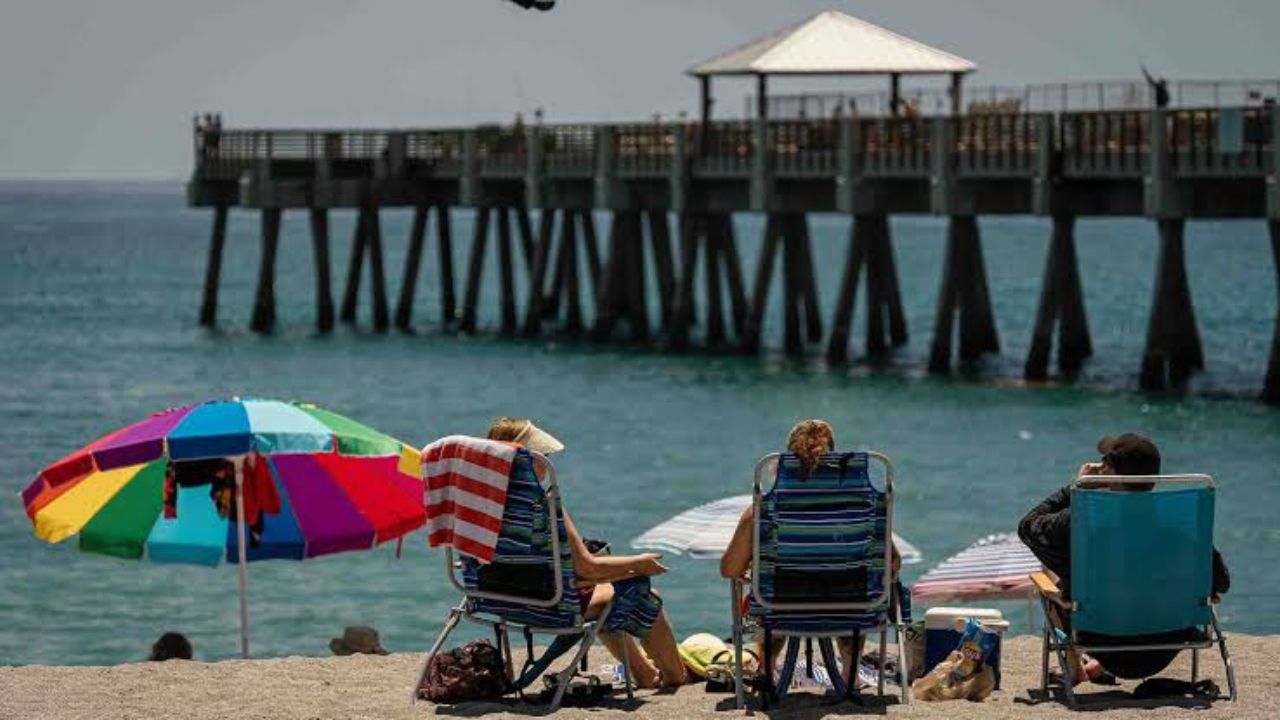
Palm Beach County is still stuck in a stretch of brutal heat this week, but if history repeats itself, the worst of it may finally be behind us.
Weather records show that West Palm Beach typically hits its hottest streak between Aug. 8 and Aug. 11, when daytime highs average around 91 degrees. That data comes from a 15-year analysis by the National Centers for Environmental Information, covering 2006 through 2020.
Right now, the National Weather Service in Miami has a heat advisory in place for the area, with highs pushing into the low 90s and heat index values climbing as high as 106 degrees. Southeast winds have done little to cut through the humidity.
For longtime South Florida residents, even a one or two degree dip feels noticeable this time of year. For newcomers, though, it can feel like there’s no relief in sight at all.
Cade Delgado, a lifeguard with the Town of Palm Beach who just moved from New York, said this summer has been an adjustment. He described the last couple of weeks in the lifeguard tower as some of the hottest he’s experienced since arriving.
When does it actually start cooling down?
Don’t expect fall-like weather anytime soon — South Florida doesn’t really do “crisp” autumn days. The first cool fronts typically don’t arrive until sometime between September and mid-October, and even then, it’s usually a brief dip in humidity with overnight lows dropping into the 60s. Consistently comfortable, low-humidity weather tends to hold off until December, January, or February.
A little relief may be coming this weekend
There’s some good news on the horizon. A plume of Saharan dust that had been suppressing rain chances is finally clearing out, according to National Weather Service meteorologist Nico Porcelli. As moisture moves back in, rain chances in Palm Beach County could climb to around 60% heading into the weekend, with afternoon storms expected daily.
That said, don’t expect the rain to arrive early enough to cap the afternoon heat. Temperatures are still likely to climb well into the 90s before any storms roll through.
One of the warmest summers on record
This summer has ranked among the top 10 warmest across much of the Florida peninsula since June 1, based on average daily temperatures. Several cities, including West Palm Beach, Miami, Fort Lauderdale, and Tampa Bay, landed in the top five warmest on record for the June 1 to Aug. 11 stretch.
The National Weather Service in Miami issued 28 heat advisories between June 1 and Aug. 12 this year, more than triple the 9 issued during the same period in 2025.
Meteorologist Ana Torres-Vazquez said part of that jump ties back to major events like the FIFA World Cup, which brought large numbers of visitors unaccustomed to South Florida’s climate. Forecasters, she said, have to factor in how poorly prepared vulnerable groups, including tourists, may be for extended heat exposure.
Fort Lauderdale is on track for its hottest summer on record, while Miami is sitting at its second warmest and Naples its fifth warmest.
Why isn’t it cooling down?
Part of the answer comes down to rain, or the lack of it. Much of the region from Orlando down to the Keys is running below normal on rainfall since the wet season began May 15, with parts of western Palm Beach County down more than 6 inches.
NWS meteorologist Chris Fisher explained that South Florida typically relies on daily summer thunderstorms to knock down afternoon heat. This year, long dry stretches, including one seven-day period with no measurable rainfall across Palm Beach, Broward, and Miami-Dade counties, have kept temperatures elevated.
Is climate change playing a role?
Climate Central meteorologist Shel Winkley said Florida’s summer heat isn’t new, but its intensity and frequency have shifted. Since 1970, average summer temperatures across the state have risen by 2.5 degrees.
She compared it to a fever: a small shift in body temperature can make someone feel noticeably unwell, and Florida’s summers are showing a similar pattern tied to heat-trapping pollution. Miami, she noted, now sees close to 120 days a year of dangerous humid heat, up from around 50 days back in the 1970s.
On the ground, lifeguards are seeing the effects firsthand. Palm Beach lifeguard Lexington Bohn said more visitors have been showing up dizzy or dehydrated after crossing hot sand to reach the water, and staff have been reminding beachgoers to carry water with them.
This story will be updated as new weather data becomes available.
