

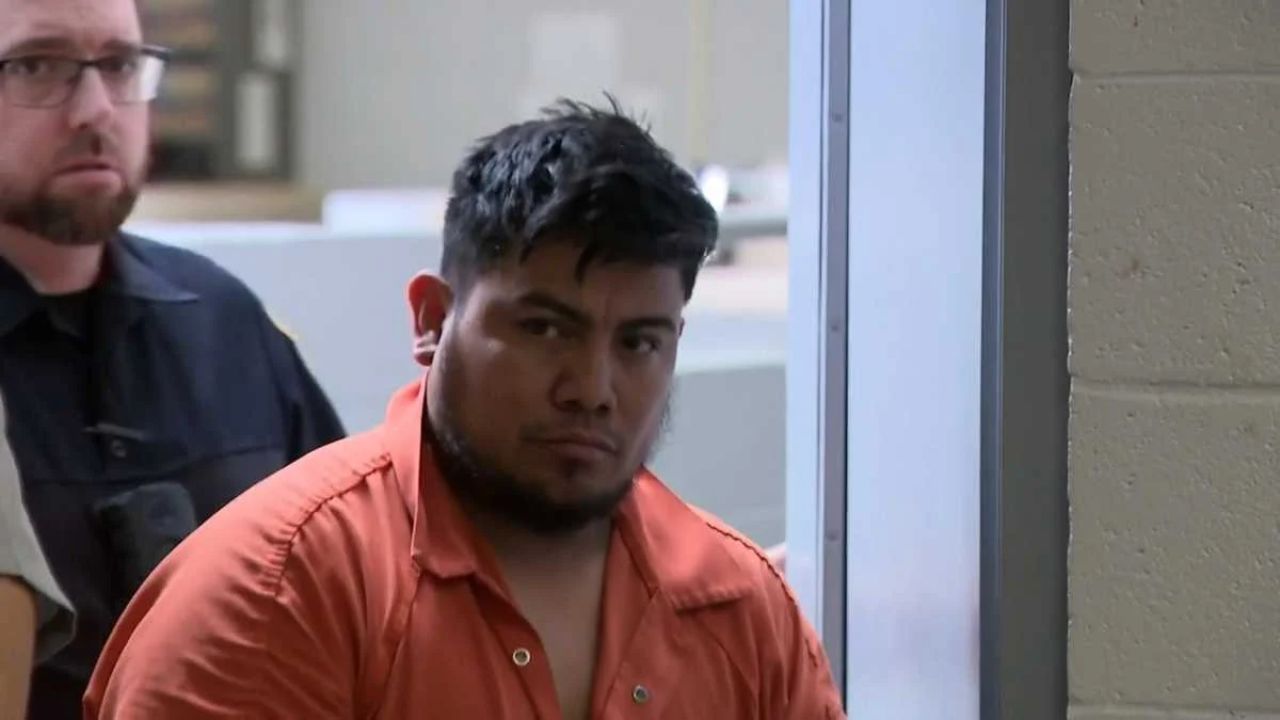
A trip that should have been an ordinary day for two South Carolina families ended in unimaginable tragedy when a drunk driver struck and killed two young boys riding their bicycles. Now, the man responsible will spend decades in prison for the deaths of the children.
Eri Otoniel Roblero Perez, 31, pleaded guilty to two counts of driving under the influence resulting in death after the fatal crash in Spartanburg County. A judge sentenced him to 40 years in prison on Monday, according to court records.
The crash happened on April 12 on Ashville Highway. Eight-year-old Mikhail’lee Smith and 12-year-old Dereon Robinson, who were close friends, had been riding their bicycles along the sidewalk while their parents followed behind in a car.
As the boys traveled along the road, Perez was driving east in a Honda Accord. The vehicle suddenly veered into the boys, striking them before crashing into a fence and a tree. Their parents witnessed the horrifying incident, leaving them with a moment of trauma that would change their lives forever.
Dereon’s mother, Megan Wilson, later recalled the last words her son spoke to her. He told her, “Go ahead Mom, I love you.” It was a brief exchange that has since become a heartbreaking memory for a mother who never expected those words to be their final goodbye.
Wilson rushed to the children after the collision, but there was little she could do to help. Emergency responders transported both boys to a hospital, where they later died from their injuries.
Driver Admitted to Drinking Before the Crash
Investigators found several open beer containers inside Perez’s vehicle and noted that he appeared unsteady on his feet following the collision.
During questioning, Perez reportedly told investigators that he had consumed 15 beers the previous night and another eight the following morning. He said he had been driving a family member to a laundromat when the crash occurred.
His blood alcohol concentration was measured at 0.264, more than three times South Carolina’s legal limit of 0.08 for most drivers. Alcohol can impair judgment, coordination and reaction time, making it dangerous to operate a vehicle even when a driver believes they are capable of driving.
The case highlights the devastating consequences that can follow when someone chooses to get behind the wheel after drinking. For the families involved, the consequences were permanent.
Families Left to Cope With an Irreplaceable Loss
The loss of both boys has left their families struggling with everyday moments that once felt routine. Wilson described how even calling everyone to dinner has become painful because she is now calling fewer names than before.
She also spoke about the difficulty of knowing that her son died while doing something he loved. Watching the collision unfold and being unable to prevent the tragedy has added another layer of grief for the family.
Spartanburg County Solicitor Barry Barnette described the deaths as a parent’s worst nightmare, emphasizing the devastating impact of reckless behavior on innocent people.
For families who lose children suddenly, grief often extends far beyond the immediate aftermath. Birthdays, family gatherings and ordinary household routines can become painful reminders of the person who is missing. In this case, two families must continue living with the loss of boys whose lives ended far too soon.
Forty-Year Prison Sentence and Deportation
Perez’s 40-year prison sentence follows his guilty pleas to both charges of driving under the influence resulting in death. The sentence holds him accountable for the deaths of Mikhail’lee Smith and Dereon Robinson.
Perez, a Mexican national who was in the United States unlawfully, is also expected to be deported after completing his prison sentence.
The tragedy serves as a sobering reminder that impaired driving can destroy multiple lives in a matter of seconds. Two children who were simply enjoying a bike ride with their families are gone, and their loved ones are left to navigate a future they never imagined.
While the prison sentence cannot undo what happened, it brings the criminal case to a significant point for the families seeking accountability. Their loss, however, will remain long after the court proceedings have ended.
