

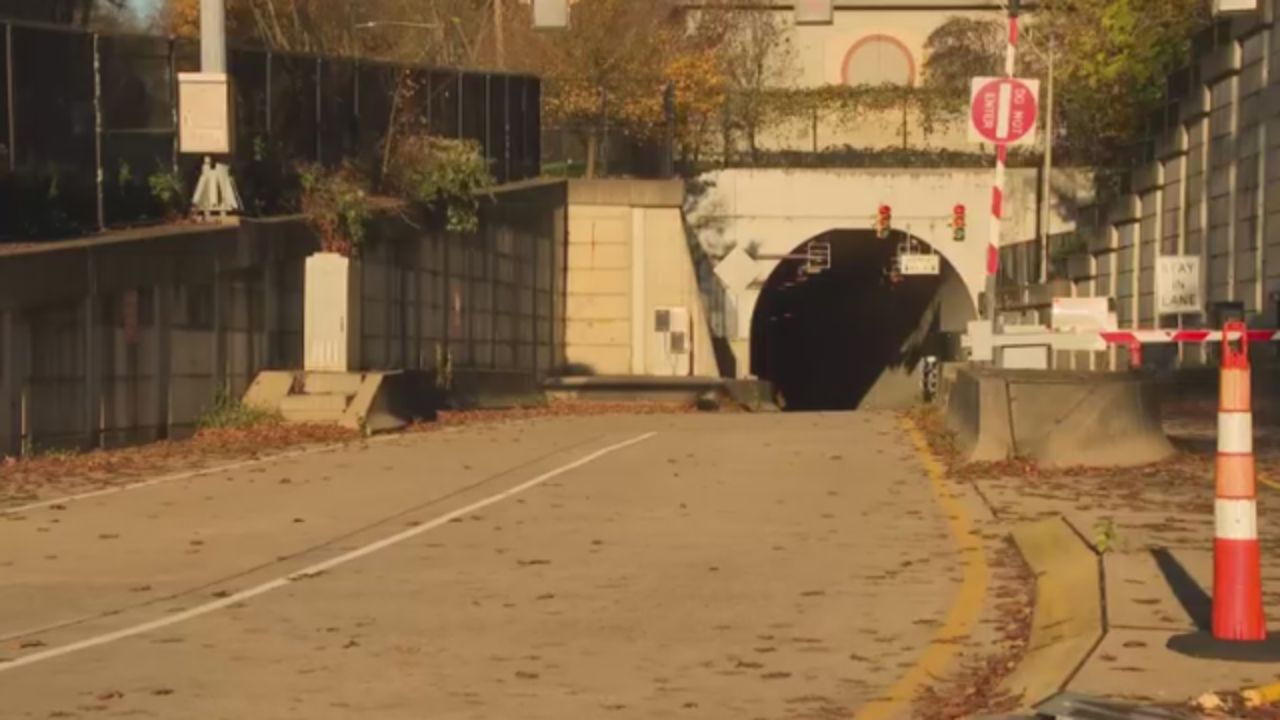
A little-used tunnel in Pittsburgh is nearing the end of its time as a public roadway, leaving regular drivers disappointed and raising questions about the cost of maintaining aging infrastructure.
The Pittsburgh Regional Transit (PRT) board has officially approved the closure of the Wabash Tunnel, with the shutdown scheduled for December 1. The decision comes as the transit agency weighs an estimated $43 million in repairs against relatively low daily traffic.
For some commuters, the tunnel has been a convenient shortcut that saves valuable time during the daily drive. Others say they are frustrated that a route they rely on could soon disappear.
Andrew Swensen, who uses the tunnel to cut about 15 minutes from his commute, said many drivers depend on it. Another regular user, Joseph Damico, questioned why the tunnel needed to close, while driver John Moore described it as the fastest way out of town.
Despite those concerns, transit officials say the expense of bringing the tunnel’s critical systems up to standard is difficult to justify given the number of people using it.
Why Pittsburgh Is Closing the Wabash Tunnel
According to PRT, approximately 1,500 drivers use the tunnel each day. The agency says that level of traffic does not justify the substantial investment required to address its deteriorating safety systems.
The projected $43 million repair bill covers several essential components, including lighting, ventilation, electrical infrastructure and fire-suppression equipment.
These systems play an important role in keeping a tunnel safe for motorists. Ventilation helps manage air quality, while lighting supports visibility and fire-suppression equipment is essential in an emergency. Electrical systems also support the operation of critical tunnel equipment.
When these components require major repairs, the work can involve more than routine maintenance. It may require extensive upgrades to bring the facility’s systems back to an acceptable operating condition.
The agency has indicated that the tunnel itself remains in fair structural condition. However, its condition does not eliminate the need to address the safety systems that support daily use.
That distinction is central to the closure decision: the concern is not simply whether the tunnel’s structure is still standing, but whether the infrastructure needed to operate it safely can be maintained at a reasonable cost.
Drivers Say the Tunnel Saves Valuable Time
For people who regularly travel through the Wabash Tunnel, the decision is about more than an aging piece of infrastructure.
Swensen believes the tunnel could help reduce pressure on other routes if more drivers knew about it. He suggested that limited public awareness may be one reason traffic numbers have remained relatively low.
Damico acknowledged that spending millions of dollars on a route used by comparatively few motorists might be difficult to justify, although he questioned whether the agency’s figures told the entire story.
Their comments highlight the challenge transportation officials face when deciding which facilities deserve continued investment. A route that appears underused in daily traffic counts may still be important to the people who rely on it for shorter commutes or more convenient access to other parts of the city.
Once the closure takes effect, drivers who currently use the tunnel will need to find alternative routes. Depending on their destinations and travel times, that could mean longer journeys or greater reliance on surrounding roads.
The extent of any resulting traffic changes will depend on where those motorists travel and how they adjust their routes after the tunnel closes.
What Happens to the Tunnel After December 1?
The closure will prevent the public from entering the tunnel, but officials do not plan to fill it in.
Instead, fencing will be installed at both entrances to block access by cars, pedestrians and cyclists.
That approach would leave the tunnel physically in place while ending its use as a public passage. It also means the structure will not immediately disappear from Pittsburgh’s transportation landscape.
There remains a possibility that the tunnel could reopen in the future. However, PRT officials have warned that delaying necessary repairs could make a return to service even more expensive as time passes.
For now, there is no confirmed reopening plan.
The decision therefore leaves the tunnel in an unusual position: it will no longer serve daily traffic, yet its continued existence could leave open questions about its long-term maintenance, ownership and possible future use.
Attempts to Find Another Owner Fell Through
Before deciding to close the tunnel, Pittsburgh Regional Transit made efforts to determine whether another government agency could take responsibility for it.
The transit agency approached the city, county and state about taking over the facility, but none agreed to assume responsibility. Those governments are also facing financial constraints, according to the reported account.
Without another agency willing to take ownership, PRT remained responsible for a tunnel that requires substantial investment despite having no regular transit service running through it.
The situation illustrates a broader infrastructure challenge: aging public facilities can continue to require maintenance even when their original purpose or level of use has changed.
Transferring ownership might have shifted responsibility for the tunnel, but it would not necessarily have eliminated the repair costs.
A Long History Comes to a Turning Point
The Wabash Tunnel is more than a century old, making it part of Pittsburgh’s long history of transportation infrastructure. Its planned closure marks a significant change for drivers who have incorporated it into their daily routines.
The debate also raises questions about how cities and transit agencies should evaluate older facilities. Traffic volume, repair costs, safety requirements and the availability of alternative routes can all influence whether maintaining a facility remains practical.
For supporters of keeping the tunnel open, its ability to save time and potentially ease congestion elsewhere is an important consideration. For PRT, the estimated $43 million price tag and the need to repair critical safety systems weigh heavily against continued operation.
Neither side’s concerns can be separated from the financial realities of maintaining public infrastructure.
What Drivers Should Know Before the Closure
Motorists who regularly use the Wabash Tunnel should plan for the December 1 shutdown and identify alternative routes before the closure begins.
Checking current traffic information and testing a different route during a normal commute may help drivers estimate how much additional travel time they could need.
The immediate impact will likely be felt most by people whose regular journeys depend on the tunnel’s convenient connection. Other motorists may see little change, depending on where they travel.
For Pittsburgh Regional Transit, the next step is to implement the closure and secure the entrances. For commuters, the focus will shift to adjusting daily travel habits.
The Wabash Tunnel’s planned shutdown is ultimately a decision about balancing public access, safety and the cost of keeping aging infrastructure operational. As December approaches, the question for Pittsburgh is no longer simply whether the tunnel can remain open, but how the city and its drivers will adapt once this familiar shortcut is no longer available.
