

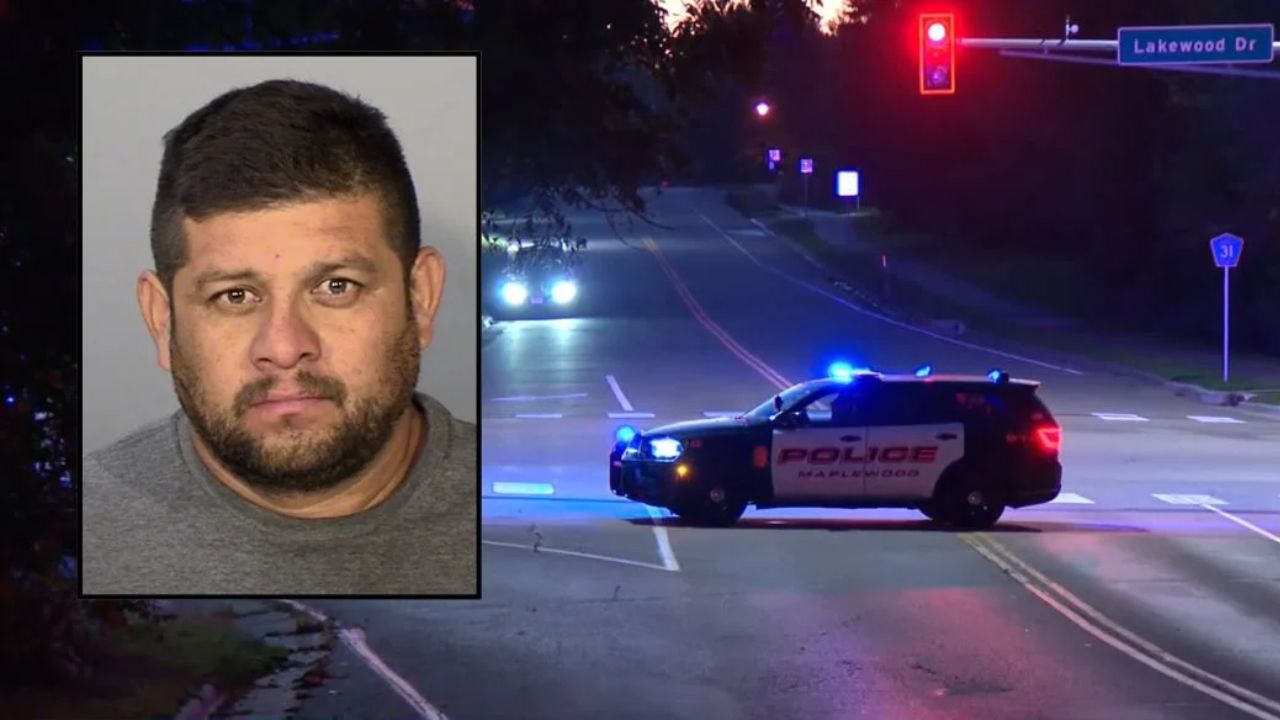
A Minnesota man who fatally struck a pedestrian with his work van and continued driving to a roofing job about two hours away has been sentenced to 360 days in jail, with the judge allowing him to serve the time at home under electronic monitoring.
Jose Hernandez Pineda, 47, pleaded guilty to criminal vehicular homicide on August 17 in connection with the death of 31-year-old Abdul Bakr Jafar. The case stems from a September 26, 2025, hit-and-run in Maplewood, Minnesota, where Jafar was found dead along the side of a road during the early morning hours.
Under the sentence, Hernandez Pineda will also serve five years of probation. He received credit for 55 days already served.
The case drew attention because investigators said the driver left the scene after the collision, traveled to another city for work and later told his former wife that he thought he might have hit a deer.
Witness Helped Police Identify the Van
The crash was reported at approximately 4:30 a.m. on September 26, 2025. Jafar was found lying beside the road in Maplewood and was pronounced dead at the scene.
According to the criminal complaint, a witness delivering newspapers saw a dark-colored van speed away from the area shortly after the incident. The witness managed to photograph the vehicle and record its license plate, giving investigators an important lead.
Police traced the registration to a local roofing company. The address associated with the vehicle was the home of Hernandez Pineda’s former wife.
When officers contacted her during the investigation, she told them she had spoken with Hernandez Pineda that morning after receiving a call from police. According to the complaint, he denied hitting a person but said he thought he might have struck a deer.
Investigators continued examining the van’s movements and looking for evidence that could establish what had happened on the road.
Investigators Found the Damaged Van Two Hours Away
Police tracked Hernandez Pineda’s cellphone to Sleepy Eye, Minnesota, roughly two hours from the location where Jafar was found.
The van was also located there, and investigators observed substantial damage to its front end.
Hernandez Pineda was reportedly working at a roofing job when investigators found him. Officers noted that his breath smelled of alcohol, according to the complaint.
Following his arrest at approximately 11:25 a.m., he underwent a breath test that recorded a blood alcohol concentration of 0.06%.
That result was below Minnesota’s standard 0.08% legal limit for adult drivers. However, a breath-test reading alone does not establish whether a person was impaired at the time of an earlier collision. The timing of the test and the other evidence are important considerations in assessing the circumstances.
Investigators also obtained surveillance footage that showed the van associated with Hernandez Pineda striking Jafar head-on, according to the criminal complaint.
The footage provided additional evidence connecting the vehicle to the fatal collision.
Why Leaving a Crash Scene Matters
Fatal hit-and-run cases can be particularly difficult for investigators when a driver leaves before police arrive. Witness observations, surveillance footage, vehicle damage and cellphone-location information can become crucial in reconstructing events and identifying the person responsible.
Minnesota law requires drivers involved in crashes resulting in injury or death to stop, remain at the scene and provide the required assistance and information. Leaving a fatal crash scene can carry serious legal consequences separate from the underlying driving offense.
In this case, investigators were able to build their account using several types of evidence, including the witness’s photograph, the damaged van, cellphone-location records and surveillance footage.
The investigation ultimately led Hernandez Pineda to plead guilty to criminal vehicular homicide.
Sentence Includes Home Detention and Five Years of Probation
Hernandez Pineda was sentenced to 360 days in jail, with the judge permitting the term to be served at home under electronic monitoring. He must also complete five years of probation and received credit for 55 days already served.
The sentence means he will not spend the entire jail term in a traditional correctional facility, provided he complies with the conditions imposed by the court.
The case closes a significant chapter in the investigation into Jafar’s death, although the sentence may leave questions for those who believe fatal hit-and-run cases should result in longer periods of incarceration.
For Jafar’s family and loved ones, the loss remains the central consequence of the crash. He was 31 when he died, and the collision ended his life in the early hours of an otherwise ordinary morning.
The case also underscores why investigators rely on witnesses and physical evidence when a driver allegedly leaves a crash scene. In this instance, a photograph taken by a newspaper delivery worker helped police begin tracing the van, while surveillance footage and vehicle damage further supported the investigation.
