

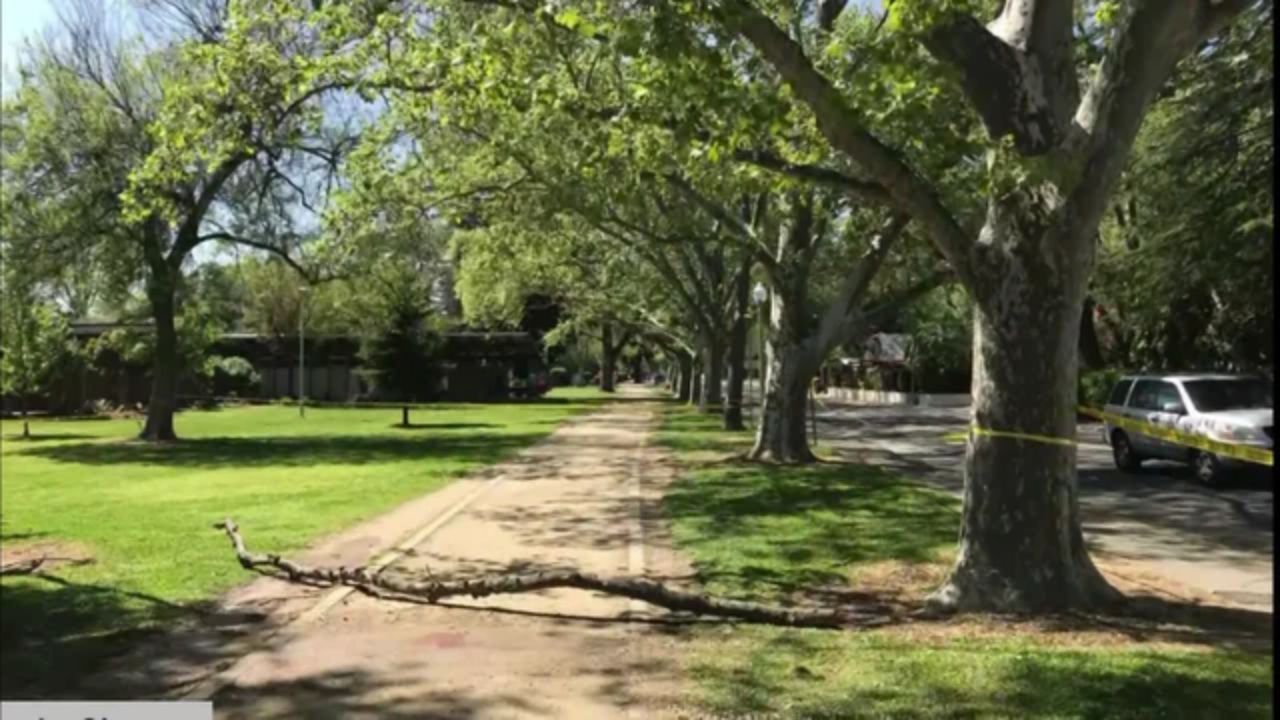
A routine run through a Sacramento park turned into a life-changing tragedy for Michael Flynn in April 2020. More than six years later, a jury has awarded him $33.3 million after finding the City of Sacramento fully responsible for the incident that left him with a severe brain injury.
Flynn was 28 at the time and pursuing a Ph.D. in theoretical physics. He was at McKinley Park when a dead tree limb, approximately 30 feet long, fell from overhead and struck him.
The impact fractured his skull and left him facing a difficult recovery that would change the direction of his life.
Looking back on those early days, Flynn described the experience as deeply painful.
“I look back on the period immediately following the accident. It was an extremely bleak period of my life. It was, very hard,” he said.
The jury’s decision, filed on October 9, 2026, brings a significant legal development in a case that has raised questions about the city’s responsibility for maintaining safe public spaces.
A promising academic career changed forever
Before the accident, Flynn was working toward a future in theoretical physics. The injury forced him to confront challenges that extended well beyond his immediate medical recovery.
Despite the severity of his condition, he continued working toward his academic goals and eventually earned his doctorate in 2021.
That achievement marked an important milestone, but completing his degree did not mean life had returned to normal. Flynn says the lasting effects of the accident continue to affect his daily activities and the professional future he once imagined.
“Not a day goes by, not an hour goes by, that I don’t feel the consequences of that accident. It was absolutely terrible,” he said.
His experience highlights how a serious traumatic brain injury can affect more than physical health. Recovery may also involve long-term difficulties with thinking, concentration, everyday tasks and returning to previous career plans.
For Flynn, the consequences have continued years after the original incident.
Why the jury held the city responsible
The central question during the legal case was whether the city could have prevented the injury by identifying and addressing the dangerous tree limb before it fell.
According to Flynn’s legal team, the limb had been dead for several years. His attorneys argued that routine inspections could have identified the hazard and allowed the city to take action before someone was hurt.
Attorney Robert Buccola said the city was relying on park visitors to report problems rather than identifying dangerous conditions through inspections.
The jury ultimately found the City of Sacramento 100% responsible and awarded Flynn $33.3 million in damages.
The verdict places the focus on an important aspect of public safety: determining whether a dangerous condition could reasonably have been discovered and corrected before an accident occurred.
The case also illustrates why tree maintenance can become a serious issue for local governments. A branch that appears harmless from the ground may pose a risk if it is dead, structurally weakened or positioned above a frequently used walkway.
However, the specific circumstances of each incident matter when determining responsibility, and the jury’s finding in Flynn’s case reflects its decision based on the evidence presented at trial.
What Sacramento’s tree maintenance program involves
Trees are an important part of Sacramento’s parks and neighborhoods, providing shade, supporting wildlife and improving the experience of public spaces. Maintaining that urban canopy also requires attention to tree health and potential hazards.
Sacramento’s Urban Forestry program oversees trees on city property and in public rights-of-way. The city also operates a neighborhood pruning program that works through public trees on a regular cycle, with additional attention given to certain safety concerns. The city’s published guidance describes an approximately five-year pruning cycle, depending on factors such as location, tree species and size. <Cite refs={[“turn122584search0″,”turn122584search1”]}/>
Routine maintenance and inspections can help identify dead branches, structural weaknesses and other warning signs. When a tree presents a safety concern, timely assessment can help determine whether pruning, removal or another intervention is appropriate.
Residents also have a way to report potentially dangerous trees on city property through the city’s 311 service. But Flynn’s case raises a broader question about the balance between responding to public reports and proactively identifying hazards before an incident occurs.
A reporting system can alert officials to visible problems, but it may not identify every dangerous condition, particularly when a hazard has developed over time or is difficult for ordinary park visitors to recognize.
The key issue is whether maintenance procedures are sufficient to protect people using public spaces and whether identified hazards receive appropriate attention.
City acknowledges the impact of the incident
Following the verdict, Sacramento City Manager Maraskeshia Smith acknowledged the seriousness of what happened and the effect it had on Flynn and his family.
In a statement, Smith described the incident as tragic and recognized its significant impact on those involved.
However, the city did not specify whether it had introduced policy changes in response to the 2020 accident.
That leaves questions about what steps, if any, have been taken specifically because of Flynn’s case. The jury’s decision may increase public interest in how trees are inspected, how maintenance priorities are established and how potential hazards are handled in busy parks.
The verdict itself does not establish that the city has changed its procedures. Any assessment of future improvements would depend on information about actual maintenance practices and policy decisions.
A reminder about safety in public parks
Parks are places where residents go to exercise, relax and spend time outdoors. Visitors generally expect these spaces to be maintained with reasonable attention to safety.
At the same time, trees are living structures that can deteriorate because of disease, decay, environmental stress and damage. Dead or weakened limbs may create hazards, which is why appropriate maintenance and professional assessment are important.
Visitors who notice a hanging dead branch, a visibly damaged tree or other signs of a possible hazard can report the concern to the responsible local agency rather than attempting to handle it themselves.
Sacramento’s experience also demonstrates the challenge cities face in managing large numbers of public trees while preserving the benefits of an urban canopy. The city maintains an inventory of approximately 100,000 public trees across parks, cemeteries and medians, making consistent maintenance and risk assessment an ongoing responsibility. <Cite refs={[“turn122584search1″,”turn122584search2”]}/>
For residents, the issue is not simply whether trees should remain in public spaces, but how those trees can be maintained while reducing preventable risks.
Flynn wants accountability and change
For Flynn, the $33.3 million award represents the outcome of a legal fight over an accident that permanently changed his life. The money cannot undo the injury or restore the future he had planned before the tree limb fell.
He hopes the case will encourage people to pay closer attention to the condition of public spaces and the responsibilities of the agencies that maintain them.
“The city has a responsibility to look after the people who live in it,” Flynn said.
His message reaches beyond one park or one lawsuit. Public spaces depend on regular upkeep, clear reporting procedures and efforts to identify hazards before they cause harm.
The jury has now delivered its decision in Flynn’s case. Whether the incident leads to additional changes in Sacramento’s tree inspection and maintenance practices remains an important question for the community.
