

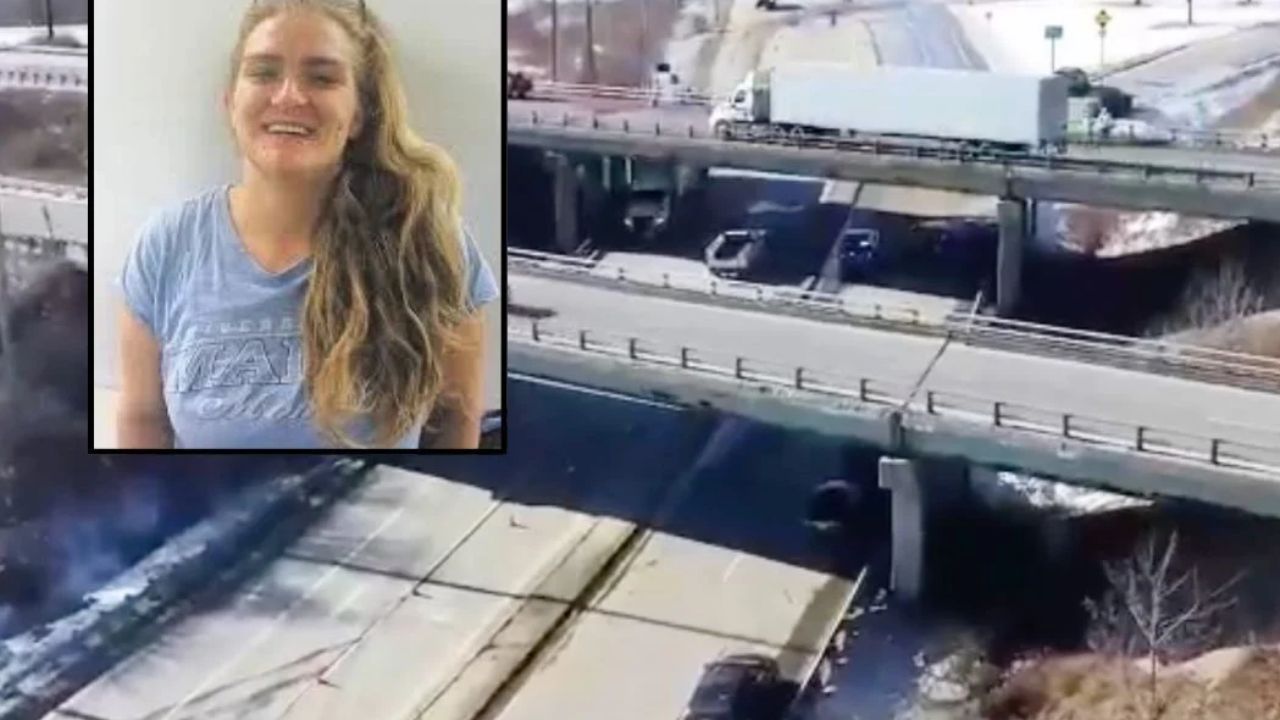
Two Maine transportation workers lost their lives in a crash on Interstate 95 after a minivan entered an active construction area, according to state police. The driver, who had two young children inside the vehicle, now faces multiple criminal charges in connection with the January collision.
Samantha Tupper, 34, of Augusta, was arrested on September 25, 2026, following a grand jury indictment related to the deaths of James Brown, 60, and Dwayne Campbell, 51. Both men worked for the Maine Department of Transportation and were killed while working near a bridge construction site in Waterville.
Tupper faces two counts of manslaughter, two counts of aggravated driving to endanger, two counts of endangering the welfare of a child and one count of aggravated assault, according to authorities.
The case stems from a January 13 crash that turned an ordinary roadwork shift into a fatal incident. A third transportation worker was injured, while the two children traveling in Tupper’s minivan escaped without injuries.
How the I-95 Crash Happened
The collision occurred at approximately 9:37 a.m. on southbound I-95 near mile marker 127 in Waterville.
At the time, transportation crews were carrying out bridge construction work near the Kennedy Memorial Drive on-ramp. The Maine Department of Transportation had closed the travel lane using traffic cones and a posted stop sign to control vehicles moving through the work area.
Investigators said Tupper was driving a gray Kia minivan with two young children inside when she allegedly failed to stop at the posted sign. She then attempted to enter the passing lane, where her vehicle was struck by a southbound tractor-trailer.
The force of the collision pushed the minivan into the construction zone, where it struck three transportation workers.
According to the initial police investigation, the impact threw Brown and Campbell over the bridge and onto Kennedy Memorial Drive below. Both men were pronounced dead at the scene.
The third worker was taken to a nearby hospital with injuries believed to be non-life-threatening.
Tupper also sustained injuries and received medical treatment. The two children in her vehicle were not hurt, and the tractor-trailer driver escaped injury.
Authorities have not publicly identified the children as Tupper’s own.
Driver Arrested Months After the Fatal Collision
Although the crash occurred in January, the criminal case reached a significant development in September.
A Kennebec County grand jury indicted Tupper on September 24, and Maine State Police arrested her the following morning at a residence in Augusta. Police said the arrest was carried out without incident.
The charges include allegations involving the deaths of the two workers, the circumstances of the driving and the presence of children in the vehicle.
Manslaughter charges are allegations, not proof of guilt. Tupper’s case will proceed through the court system, where the prosecution must establish the charges against her.
At the time of the September arrest, authorities said she was being held at the Kennebec County Jail. Her next court appearance and the eventual outcome of the case will determine how the proceedings move forward.
Why Work-Zone Safety Remains a Serious Concern
The Waterville crash highlights the risks faced by road crews who work just feet away from moving traffic.
Construction zones often require temporary lane closures, sudden changes in traffic patterns and drivers to stop or merge in unfamiliar locations. For workers repairing bridges, maintaining highways or managing traffic, even a single vehicle entering a closed lane can create a dangerous situation.
Maine’s transportation officials have repeatedly emphasized the importance of slowing down, paying attention to signs, maintaining a safe following distance and merging when it is safe to do so.
State transportation safety information reports that Maine averages nearly 600 crashes in work zones each year, with several fatalities and roughly 200 injuries. The risks extend beyond construction employees to drivers and passengers traveling through these areas.
Nationally, work-zone safety campaigns also stress that drivers should avoid distractions and prepare for sudden stops or changes in road layout.
These precautions are especially important near bridges and highway ramps, where limited space can leave workers with few opportunities to move out of the way of an approaching vehicle.
Two Workers Remembered After the Tragedy
For colleagues and loved ones of Brown and Campbell, the crash represents the loss of two people who were working as part of Maine’s transportation workforce.
Their deaths also underscore the dangers faced by public employees who maintain the roads and bridges used by thousands of drivers every day.
The investigation began with the circumstances of the January collision and later led to a grand jury indictment and arrest. The criminal proceedings will address the allegations against Tupper, while the crash remains a reminder of how quickly conditions can become deadly in an active work zone.
For drivers approaching highway construction, the lesson is straightforward: posted signs, cones and temporary traffic controls are there to protect both motorists and the people working on the road. Paying attention and following those instructions can help prevent another preventable tragedy.
