

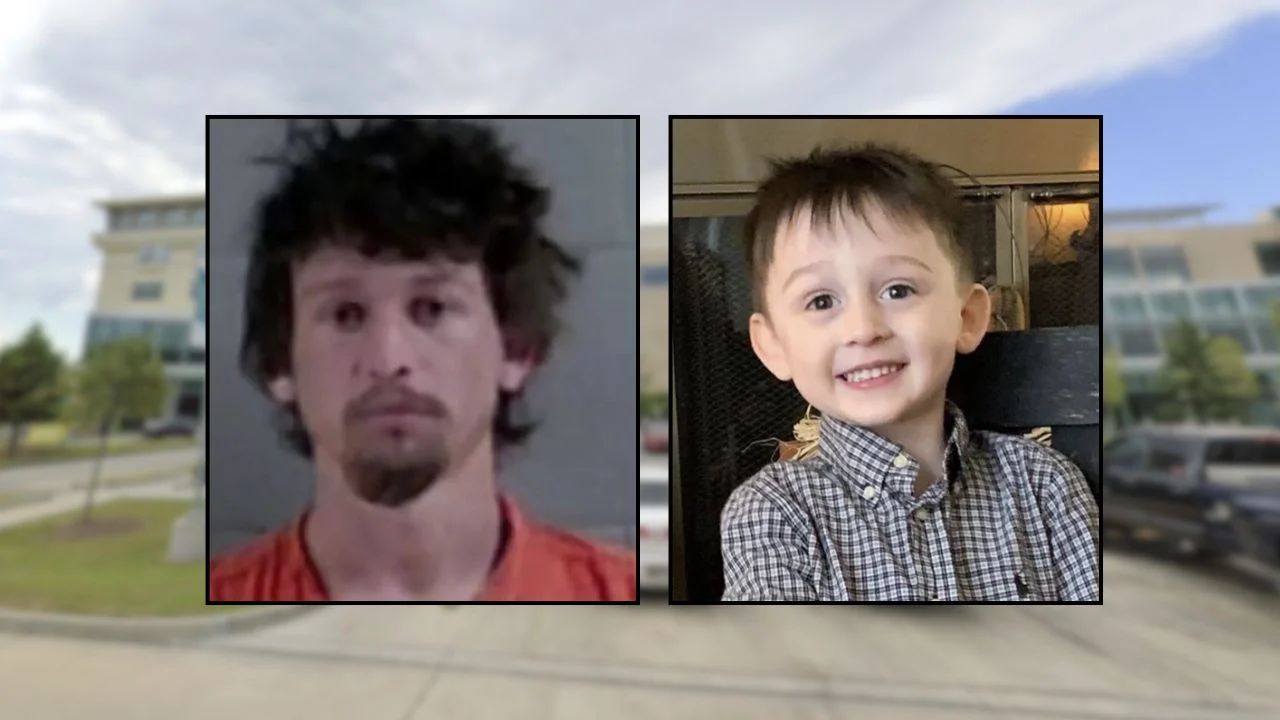
A Louisiana father will spend decades in prison following the death of his 5-year-old son, Leonardo “Leo” Eslinger, whose final days were marked by severe malnutrition and serious injuries. Investigators said the boy was not taken for medical treatment despite his worsening condition.
Joseph Eslinger, 29, pleaded guilty to manslaughter after initially facing a first-degree murder charge in connection with his son’s death. He was sentenced to 40 years in prison.
The case has also raised painful questions about earlier warnings concerning Leo’s safety and whether more could have been done to protect him before the situation became fatal.
A medical emergency that ended in tragedy
Emergency responders were called to Eslinger’s home in Albany, Louisiana, on December 28, 2023, after receiving a report that a child was not breathing.
Inside the home, they found Leo unresponsive. He was transported by helicopter to a children’s hospital in New Orleans for emergency treatment.
Despite medical efforts, the child died on December 31, 2023, three days after he was found.
An autopsy revealed the extent of the harm Leo had suffered. Investigators reported that he was malnourished and had bruises and lacerations across his face and body. He also had multiple brain bleeds.
The findings became central to the investigation into how the young boy had been treated and why he had not received medical attention before his condition became critical.
Father claimed his son was not really sick
During questioning, Eslinger told detectives that Leo had been ill in the days leading up to the emergency. He reportedly said the child had stopped talking and refused to eat.
However, Eslinger allegedly claimed that Leo was “mentally manifesting these symptoms” and was not actually sick.
According to the investigation, that belief was why he did not seek medical care for his son.
A child who stops eating, becomes unusually withdrawn or appears seriously unwell may be experiencing a medical emergency. Such symptoms can have many causes, and determining what is wrong requires an appropriate medical assessment rather than an assumption that the illness is not real.
In Leo’s case, the autopsy findings revealed serious physical conditions that required attention. His death prompted a criminal investigation that ultimately led to his father’s manslaughter plea.
Prosecutors say the boy was treated differently
Authorities alleged that Eslinger was not the only adult involved in the abuse.
His girlfriend at the time, Diana Lopez, 29, was also accused of participating in the mistreatment. Prosecutors said Leo was singled out and treated differently from his two younger siblings.
Lopez faces a first-degree murder charge in connection with the child’s death. Her case remains separate from Eslinger’s guilty plea and sentence, and the allegations against her have not been established as a conviction.
The investigation has drawn attention to the vulnerability of young children who depend entirely on adults for food, medical care and protection. When a child is allegedly subjected to abuse or neglect by the people responsible for meeting those needs, identifying warning signs can become especially important.
Family members say they raised concerns before his death
The case has been particularly painful for Leo’s extended family, who say they tried to raise concerns about his safety before he died.
Eslinger moved from Indiana to Louisiana in 2023 after Leo’s mother was arrested on burglary and criminal mischief charges. In March of that year, Eslinger and the children’s mother filed for divorce, and he obtained custody of their three children.
Leo’s great-aunt, Kristi Held, said she also sought custody of the children because Eslinger had already been accused of harming Leo.
Held said she had reported concerns to authorities. She also said that information from those reports was supported by first responders who had treated Leo for injuries, but the concerns could not be substantiated at the time.
Following Leo’s death, Held questioned why the earlier warnings had not led to stronger intervention.
“Why didn’t they listen to us? Why didn’t they believe us?” she asked. She also questioned why the child had been left to suffer.
Her comments reflect a difficult issue in child-protection cases: reports of suspected abuse must be assessed carefully, but authorities may have limited evidence at the time a complaint is made. When concerns cannot be substantiated, determining what further steps are possible can be challenging.
That uncertainty makes documentation, communication between agencies and appropriate follow-up particularly important when repeated concerns involve a young child.
Why recognizing child abuse and medical neglect matters
Child abuse does not always present itself through one obvious warning sign. Unexplained injuries, repeated bruising, severe weight loss, persistent hunger, untreated medical problems or sudden changes in a child’s behavior can all warrant closer attention.
Medical neglect can also place a child in danger when a caregiver fails to obtain necessary treatment for a serious illness or injury.
These signs do not automatically prove abuse, but they should not be dismissed without appropriate assessment. Medical professionals, child-protection agencies and law enforcement may each have a role in evaluating concerns, depending on the circumstances.
In the United States, suspected child abuse or neglect can generally be reported to local child-protection authorities. Immediate medical emergencies require emergency services, while concerns about injuries or ongoing neglect should be shared with the appropriate authorities for assessment.
Leo’s case underscores the stakes when a child’s health deteriorates while the adults responsible for his care fail to obtain the help he needs.
A 40-year prison sentence
Eslinger’s guilty plea to manslaughter brought his criminal case to a sentencing outcome. He received a 40-year prison sentence for his role in the circumstances surrounding Leo’s death.
Although the plea resolved Eslinger’s case, the separate prosecution of Lopez means the broader legal proceedings connected to the child’s death have not necessarily concluded.
For Leo’s relatives, however, the sentence cannot undo what happened or answer every question about the warnings raised before his death.
The case leaves behind a devastating reminder of the responsibility adults have to protect children who cannot independently seek help. A five-year-old depends on caregivers not only for food and shelter, but also for recognizing illness, obtaining medical treatment and ensuring that home is a safe place.
Leo’s death has brought those responsibilities into sharp focus, alongside the family’s lingering questions about whether earlier intervention could have changed the outcome.
