

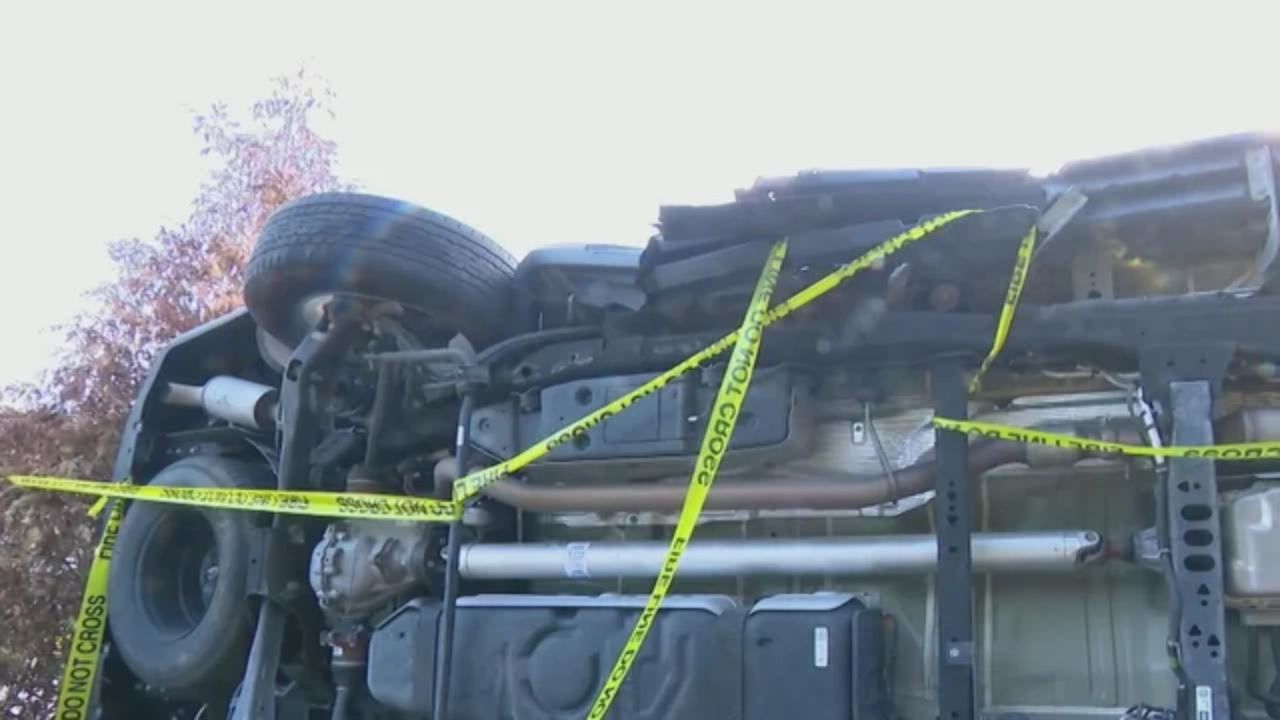
A crash in Dallas’ Kessler Park neighborhood early Saturday morning left several vehicles damaged and a property narrowly avoiding more serious damage. What has raised additional concern among residents, however, is how long it took police to reach the scene.
A nearby resident said he heard a loud crash at about 12:40 a.m. and went outside to see what had happened. He said a vehicle had struck the property, hitting multiple vehicles and coming close to a home.
The resident said a woman was behind the wheel and appeared to be hurt. He called 911 after hearing her complain of chest pain. According to his account, the woman remained at the scene for a period of time and appeared to fall asleep before eventually waking up and making a phone call.
By the time officers arrived, the driver was no longer there.
Dallas police confirmed that the first call about the incident was received at approximately 12:45 a.m. A patrol unit reached the location shortly before 3:30 a.m., putting the response time at roughly two hours and 45 minutes.
The department said its Southwest Patrol division was handling several emergency and high-priority calls during the same period. Multiple calls were reportedly waiting for an extended time.
Police are now reviewing the incident, including how the call was classified, what information dispatchers received while it was pending and which officers were available to respond.
The unusually long wait comes as Dallas continues to work on improving police response times. Recent city data shows that response times have improved compared with the previous year, although delays remain substantial for some lower-priority calls.
For February 2026, Dallas police data showed average response times of about 8.3 minutes for Priority 1 calls, nearly 65 minutes for Priority 2 calls, about two hours for Priority 3 calls and roughly 2 hours and 17 minutes for Priority 4 calls. The department recorded more than 32,600 dispatched 911 calls that month.
Earlier 2026 data also showed significant year-over-year improvements in several priority categories. In March, for example, the Central patrol division recorded an average Priority 3 response of about 61 minutes, compared with more than 223 minutes during the same month a year earlier.
Those figures provide broader context, but they do not explain the specific delay in Kessler Park. Police said the individual call is being reviewed to determine whether its priority level, the information available to dispatchers or officer availability affected the response.
For residents who watched the situation unfold Saturday morning, the issue is less about citywide averages and more about what happened during those nearly three hours.
The crash also highlights the difference between overall response-time improvements and the experience of residents waiting for help during a particular incident. The department’s review is expected to provide more information about why the call remained pending for so long and whether its classification was appropriate.
At this point, police have not indicated that the driver was arrested in connection with the crash, and the circumstances surrounding the suspected impairment remain subject to official investigation.
