

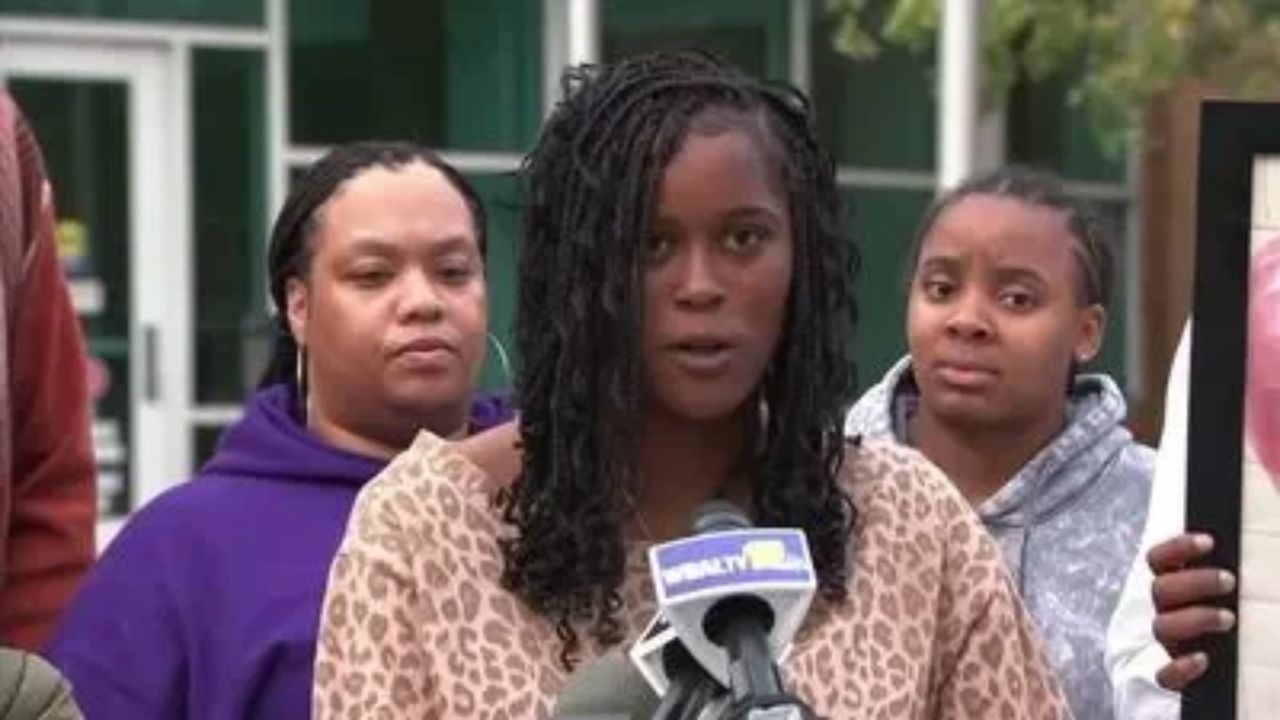
Jordan Bright’s family left Wednesday’s court proceedings without knowing the details of the sentence imposed on the 14-year-old boy involved in the fatal crash.
Because the defendant is a juvenile, officials have not publicly released the terms of the sentence. Jordan’s mother, Nyjada Billy, said the restrictions surrounding the case have made an already painful situation even more difficult for her family.
“This is so important and for me not to be able to talk about it is frustrating,” Billy said.
Jordan was killed in June after she was struck near West Pratt Street and South Monroe Street in Southwest Baltimore. Police said the teenager was driving a stolen vehicle when the crash occurred. Jordan was taken to a hospital with severe injuries but later died.
The teenager was subsequently charged with auto theft and vehicular manslaughter and handled through the juvenile justice system.
Family says Jordan’s loss cannot be measured by the sentence
For Billy and the rest of Jordan’s family, Wednesday’s court proceeding was another painful step in a case that has changed their lives.
Billy said she feels the juvenile system has continued to provide opportunities to the teenager while her daughter will never have the opportunity to grow up.
Jordan was remembered by her family as a happy child with a big personality and a love for skating. Earlier in the summer, relatives and community members gathered near the crash site for a vigil, where photographs, balloons and other tributes were placed in her memory.
Her death also drew attention from people in the surrounding Baltimore community, many of whom came together to remember the child and support her family.
Why the sentence remains private
Juvenile cases in Maryland are subject to confidentiality rules that limit the amount of information that can be publicly released about a young defendant and the outcome of the case.
The Baltimore City State’s Attorney’s Office has said that, in certain circumstances, juveniles can remain under the supervision of the Maryland Department of Juvenile Services until they reach 21.
Depending on the offense and the circumstances of a case, juvenile consequences can include probation or commitment to a juvenile facility, along with continued supervision and services.
That framework is now also being affected by changes coming to Maryland’s juvenile justice system.
Maryland juvenile law is changing this fall
The Youth Charging Reform Act, signed into law earlier this year, is scheduled to take effect October 1, 2026.
The law changes several provisions involving juvenile court jurisdiction, detention and confinement. Among other changes, it alters when certain young people can be detained and changes some rules concerning serious offenses and juvenile confinement.
The changes are separate from the sentence handed down in Jordan’s case, but they come as Maryland continues to revise how its juvenile justice system handles serious offenses involving young defendants.
For Jordan’s family, however, the legal changes do not alter the central reality they have faced since June.
Their daughter is gone, while the legal process surrounding the teenager involved in her death continues under rules that keep many details out of public view.
Billy is now asking local and state leaders to look closely at Jordan’s case and consider whether Maryland’s juvenile system provides the level of accountability families expect when a child dies.
For the Bright family, the focus remains on remembering Jordan and keeping her name from being lost after the tragedy that took her life.
