

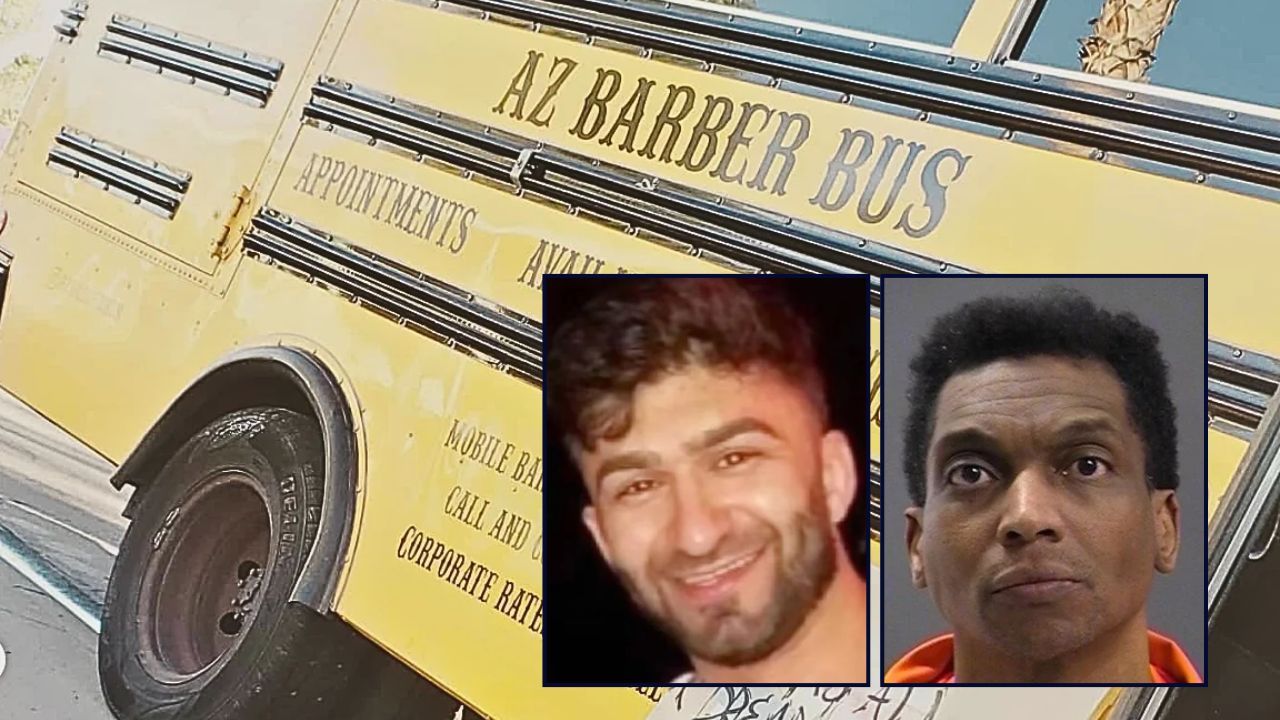
Ilya Shimonov had turned an unusual business idea into reality: a barbershop built inside a converted school bus, allowing him to bring haircuts directly to customers. Known as “Mike the Barber,” the 32-year-old was building a life around that dream when a routine appointment in Scottsdale, Arizona, ended in a deadly attack.
More than four years after his killing, Robert Celifie, a California man prosecutors say organized the murder-for-hire plot, has been sentenced to life in prison.
The Maricopa County Attorney’s Office announced the sentence on October 26, 2026, after Celifie was convicted in August of conspiracy, first-degree murder and first-degree burglary. His alleged accomplice, Chaze Cable, was convicted of the same offenses by a separate jury in 2025 and also received a life sentence.
The case centered on the January 3, 2022, killing of Shimonov, who was shot multiple times in a Scottsdale hotel parking lot shortly after completing a haircut appointment.
Prosecutors say Celifie arranged the attack and supplied Cable with the resources and information needed to carry it out. Although investigators believe the killing was connected to Shimonov’s cellphone, authorities have not publicly established why the device was allegedly wanted.
A Dream Built on Wheels
For Shimonov, the mobile barbershop was more than a way to earn a living. His mother described it as a dream he had worked to achieve.
The converted school bus allowed him to operate a business outside the traditional barbershop setting, taking his services to customers rather than requiring them to visit a fixed location.
“He made it happen,” his mother said while speaking publicly about the case following the sentencing announcement.
That achievement makes the circumstances of his death particularly painful for his family. On the evening he was killed, Shimonov had just finished providing a haircut at a hotel parking lot in Scottsdale.
According to prosecutors, the appointment appeared to be an ordinary part of his working day. Moments later, he was shot multiple times and died from his injuries.
Investigators would eventually uncover evidence that led them to believe the attack had been planned rather than being a random confrontation.
Investigators Followed the Stolen Phone
One of the first significant developments came when detectives discovered that Shimonov’s cellphone was missing after the shooting.
Investigators tracked the device as it traveled away from Scottsdale, first reaching Las Vegas and then Los Angeles. That movement provided an important investigative lead as police worked to identify the people responsible.
Prosecutors later alleged that Cable traveled to Scottsdale in a vehicle belonging to Celifie and used a firearm supplied by him to kill Shimonov.
According to the prosecution, Celifie did more than provide transportation and a weapon. He allegedly gave Cable photographs of Shimonov, money, the location and timing of the planned attack, instructions to take the cellphone and directions for what to do afterward.
Those allegations formed the basis of the prosecution’s argument that Celifie was responsible for organizing the killing even though he was not the person who allegedly fired the shots.
The case demonstrates how investigators can build a homicide prosecution using several kinds of evidence, including digital location information, witness accounts and evidence connecting suspects to a planned crime.
Cellphone tracking can help establish a device’s movements, but it does not independently prove who possessed it at every point. Investigators must consider that information alongside other evidence when reconstructing events.
Why Was the Barber Targeted?
Despite the convictions and life sentences, one central question remains: Why did the defendants allegedly target Shimonov?
Authorities believe the cellphone was a motive for the attack, but prosecutors have not publicly explained what made the device valuable to Celifie or Cable.
According to prosecutors, Shimonov did not know either man personally. However, Celifie and Shimonov reportedly had connections through people they both knew.
That possible indirect connection has added another layer of uncertainty to the case. Investigators presented evidence of planning and coordination, but the precise reason behind the alleged plot has not been fully disclosed publicly.
During a press conference following the sentencing, deputy county attorney Richard Dusterhoft described the alleged instructions surrounding the attack. He said Celifie provided the hotel address and told Cable to take the phone after Shimonov finished the haircut appointment.
Prosecutors also cited the cellphone’s subsequent trip to the Orleans Hotel in Las Vegas as part of the evidence supporting their account.
The prosecution’s theory was that the device was central to the plan. However, without a publicly established explanation for why it was sought, questions about the ultimate motive remain unanswered.
Both Men Will Spend Their Lives in Prison
Celifie’s conviction followed a trial in which prosecutors presented their account of the planning and execution of the crime. In August 2026, a jury found him guilty of conspiracy, first-degree murder and first-degree burglary.
Cable had already been convicted of the same offenses in a separate trial in 2025 and sentenced to life imprisonment.
The two verdicts addressed different roles in the alleged plot: prosecutors identified Cable as the person who carried out the shooting and Celifie as the person who arranged and supported it.
Maricopa County Attorney Rachel Mitchell said Celifie’s role in organizing the crime made him responsible for its deadly outcome.
Her office credited the Scottsdale Police Department and prosecutor Richard Dusterhoft for their work on the case.
The convictions reflect the prosecution’s position that responsibility for a planned killing can extend beyond the person who directly commits the violence. A person found guilty of deliberately arranging and facilitating a murder can face the same severe consequences under the law.
A Mother Left With Memories of Her Son
For Shimonov’s mother, the sentencing brought an important measure of accountability, but it could not restore the future her son had been building.
His mobile barbershop represented independence, ambition and the satisfaction of turning an idea into a working business. The fact that he was killed shortly after completing a haircut has remained a particularly painful detail in the case.
While the legal proceedings have now resulted in life sentences for both defendants, the unanswered question surrounding the cellphone continues to distinguish this case from many other murder-for-hire prosecutions.
Authorities have described the alleged planning in considerable detail, including the transportation, weapon, photographs and instructions prosecutors say were provided before the attack. Yet the publicly available account has not established exactly why Shimonov was selected as the target.
For his family, the outcome means that the men convicted in connection with his death will remain imprisoned for life. For investigators, the case stands as an example of how following a stolen device and examining the relationships between people connected to a crime can help expose a larger alleged plan.
Shimonov’s story, however, extends beyond the criminal case. He was a man who pursued an unconventional business dream and succeeded in bringing it to life. His mother’s recollections ensure that his ambitions and accomplishments remain part of the story, even as the legal system has delivered its judgment on the men convicted of killing him.
