

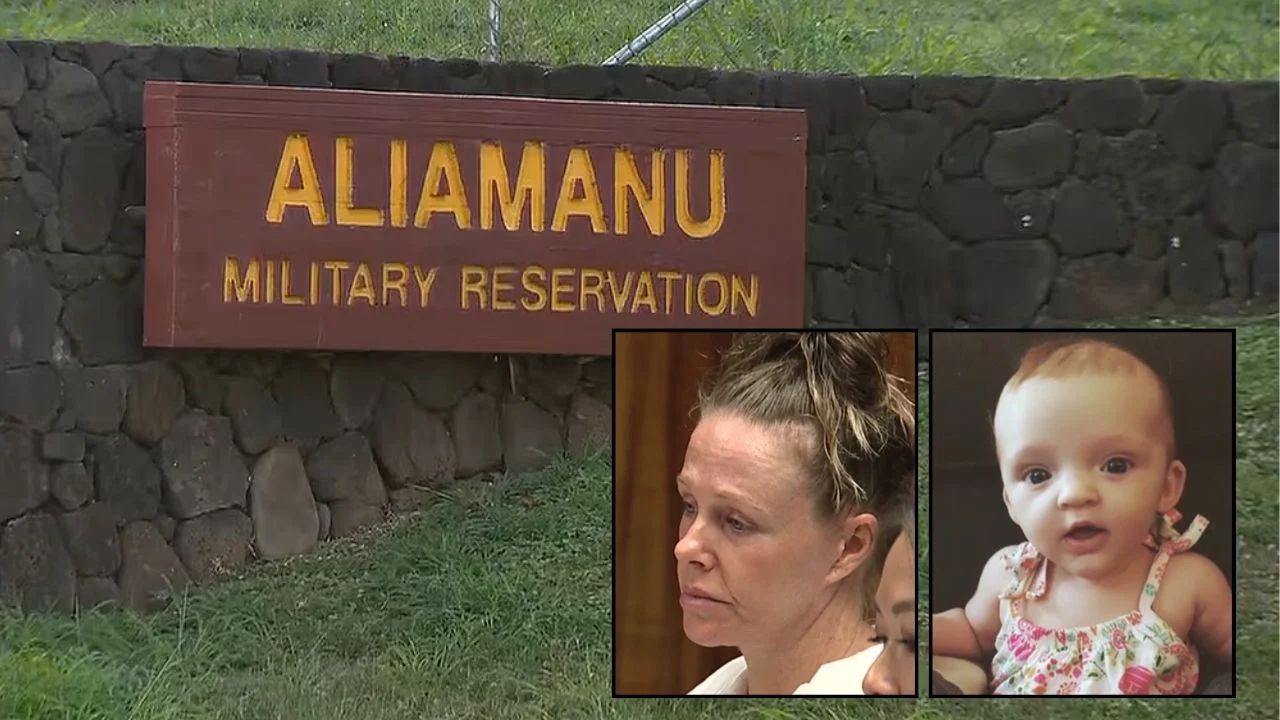
The U.S. Army has agreed to pay $900,000 to the parents of a 7-month-old girl who died after receiving a fatal dose of Benadryl while in the care of an unauthorized daycare operator in military housing in Hawaii.
The settlement follows years of legal proceedings over the February 2019 death of Abigail Lobisch, whose parents, Anna Lobisch and Army National Guard member James Lobisch, accused military officials and a housing management company of failing to stop an unlicensed childcare operation despite earlier warnings.
Abigail was being cared for by Dixie Denise Villa at her home in the Aliamanu Military Reservation on Oahu when the tragedy occurred. Villa was later convicted of manslaughter and sentenced to 20 years in prison in May 2025.
The Army’s settlement brings a significant development in the family’s civil lawsuit, which was filed in 2020. However, a separate agreement involving Island Palm Communities, the contractor responsible for managing the military housing, remains under discussion.
Previous Complaints Raised Concerns About the Daycare
Court documents indicate that concerns about Villa’s childcare operation had surfaced well before Abigail’s death.
Reports were made in 2017 and 2018 about unauthorized childcare at Villa’s home. In response, the Army issued multiple cease-and-desist notices, but the operation continued, according to the lawsuit.
The family’s complaint alleged that military officials and the housing contractor knew, or should have known, that the unauthorized daycare presented potential risks to children.
The lawsuit also described incidents in which children were reportedly left without adequate supervision. In one account, a young boy became trapped in a play structure while crying, and other children eventually helped free him.
Abigail’s parents argued that the authorities should have taken stronger action to stop the operation and protect the children being cared for there.
The complaint further alleged that officials failed to adequately address the reported concerns or notify child protection authorities about the potential dangers.
What Happened to Baby Abigail?
On February 23, 2019, Anna Lobisch left Abigail in Villa’s care overnight. The following morning, Villa found the baby cold and unresponsive and called emergency services.
Abigail was pronounced dead on February 24, 2019. An autopsy later determined that she died from diphenhydramine toxicity. Diphenhydramine is the active ingredient in Benadryl, an antihistamine commonly used to treat allergy symptoms.
Autopsy findings revealed approximately 2,400 nanograms per milliliter of diphenhydramine in the baby’s blood, a concentration reported to be nearly twice the level considered lethal in infants.
Prosecutors accused Villa of administering the medication to make the baby lose consciousness. The case raised serious concerns about the dangers of giving medication to infants without appropriate medical direction.
Benadryl should not be given to children under 2 for cold symptoms, and children under 6 should not receive it unless directed by a doctor. Antihistamines should never be used to make a baby sleep.
Villa was convicted of manslaughter in November 2024. In May 2025, a judge sentenced her to the maximum 20-year prison term allowed for the offense.
Villa is appealing her conviction.
Mother Says Grief Will Last a Lifetime
For Abigail’s parents, the legal proceedings have unfolded alongside the lasting pain of losing their daughter.
During Villa’s sentencing hearing in May 2025, Anna Lobisch spoke about the impact her daughter’s death has had on her life.
She described carrying the grief every day and struggling with the reality that she would never again hear Abigail call her mother.
Her statement reflected the family’s continuing loss more than six years after the tragedy.
The criminal case held Villa accountable through a manslaughter conviction and prison sentence. The separate civil lawsuit, meanwhile, focused on whether the Army and the housing contractor could have done more to prevent the unauthorized daycare from operating.
What the $900,000 Settlement Means
Under the agreement, the federal government will pay $900,000 to settle the family’s claims against the United States.
The settlement does not constitute an admission of liability or wrongdoing by the government. The Army has denied that it is legally responsible for the family’s losses.
The case also named Island Palm Communities, which owned and managed the residential properties involved. The family’s claims against the contractor are being addressed separately, with the parties still working to finalize their agreement.
The lawsuit has drawn attention to the oversight of childcare operations in military housing, particularly when complaints have been made about unauthorized businesses operating inside residential communities.
For military families, access to safe and reliable childcare can be essential. The allegations in this case raise questions about how reports of potentially unsafe childcare arrangements are investigated, how responsibilities are coordinated between military officials and housing managers, and what steps are taken when previous warnings fail to stop an operation.
Although the financial settlement marks a major development in the family’s legal battle, it cannot undo the loss of Abigail. For her parents, the case remains tied to the memory of a daughter whose life ended before she reached her first birthday.
