

When construction workers discovered human remains in a wooded area in Wisconsin in September 2022, investigators faced a difficult question: Who was the woman, and how had she ended up there?
The discovery was made near an orthopedic medical facility in the Town of Delafield, in Waukesha County. The victim was later identified as 44-year-old Stephanie Pavlons, a mother whose family had not seen her for weeks.
Her disappearance had left loved ones deeply concerned. As detectives began piecing together her final days, attention turned to her longtime boyfriend, Matthew Pahl, who was believed to have been among the last people to see her alive.
What followed was an investigation built around seemingly ordinary details: surveillance footage, cellphone records, online searches and a bright pink water bottle.
Those clues eventually helped prosecutors build a murder case against Pahl, even though investigators could not establish the precise cause of Pavlons’ death.
In November 2025, a jury found him guilty of first-degree intentional homicide and hiding a corpse. He was subsequently sentenced to life in prison without the possibility of parole.
A family’s search for answers
Pavlons’ parents had not spoken with their daughter for several weeks when authorities contacted them following the discovery of the remains.
Her mother, Georgiann Pavlons, later recalled the shock of learning what had happened.
The family told investigators that Pahl, who shared a daughter with Stephanie, was likely to have been one of the last people who knew where she was.
When detectives interviewed him, Pahl described Stephanie as someone who struggled with depression and suicidal thoughts. He suggested that her mental health might explain her disappearance and claimed he had last seen her weeks earlier.
Investigators, however, began examining whether his account matched the available evidence.
The challenge was significant. Stephanie’s remains had been exposed to the elements for an extended period, making it difficult for forensic specialists to determine how she died. Without a definitive cause of death, detectives had to reconstruct her final movements and examine the circumstances surrounding her disappearance.
That meant looking closely at the details surrounding the last day she was known to be alive.
The footage that changed the investigation
Surveillance cameras became an important part of the case.
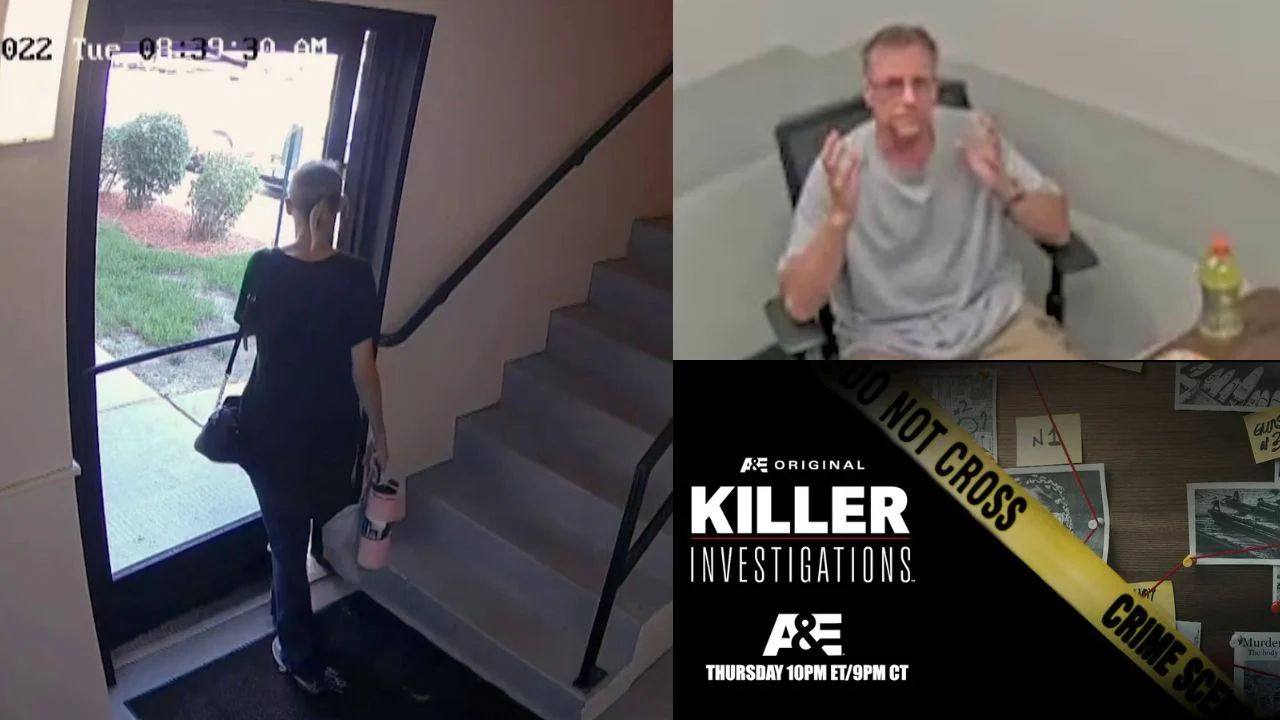
Investigators obtained video showing Pavlons leaving her apartment building with a pink water bottle and a black purse. Pahl was seen picking her up shortly afterward.
Additional footage from a nearby gas station captured what investigators considered the last known images of Stephanie alive. Cellphone location information also placed the couple together as they traveled in Pahl’s vehicle.
The pair were connected to a visit to an orthopedic facility, where Pahl had a medical appointment.
According to the investigation, Pahl later returned to the apartment building carrying items associated with Stephanie, including the pink water bottle and her purse. Stephanie herself was not seen returning.
That difference became a critical detail.
When detectives questioned Pahl about the belongings, he reportedly dismissed their significance, saying the purse and water bottle were unimportant.
But investigators viewed the items differently. They offered a way to compare his account with what cameras had recorded and what police later recovered.
The bottle was not important because it directly established how Stephanie died. Its significance came from where it appeared in the timeline and how it helped investigators challenge the explanation they had been given.
Digital evidence raised more questions
As detectives continued their work, they examined cellphone information and Pahl’s online activity.
Investigators found that searches involving Stephanie’s name and local obituaries had taken place before her remains were publicly discovered. He also accessed information about the investigation, according to evidence presented in the case.
Prosecutors argued that this activity, combined with the surveillance footage and his statements to detectives, was inconsistent with his claim that he did not know what had happened to Stephanie.
Investigators also uncovered communications between Pahl and women he had met online in the Philippines. Those conversations became part of the broader picture prosecutors presented about his behavior and circumstances during the period surrounding Stephanie’s disappearance.
No single digital record answered every question. Instead, detectives assembled a timeline from multiple sources and compared that timeline with the statements Pahl had made.
This kind of investigative work can be particularly important when a case lacks an eyewitness or definitive forensic evidence. Location records can help establish where a phone traveled, while surveillance video can show a person’s movements. Online searches and messages may provide additional context, although their meaning must be evaluated alongside other evidence.
In Pavlons’ case, prosecutors ultimately relied on the combined weight of these details rather than a single piece of physical evidence that independently established the crime.
Prosecutors pointed to a history of abuse
During the trial, prosecutors addressed Stephanie’s mental health, which Pahl had emphasized when speaking to detectives.
They argued that her emotional struggles could not be separated from the relationship she had with him.
Prosecutor Sue Opper acknowledged that Pavlons had faced personal difficulties but argued that her journals documented abuse she had experienced during the relationship.
Other evidence presented by the prosecution was intended to establish a pattern of controlling and abusive behavior.
The state argued that the circumstances surrounding Stephanie’s disappearance, Pahl’s conduct afterward and the digital evidence together supported the conclusion that he had intentionally killed her and concealed her body.
The defense challenged the prosecution’s interpretation of the evidence.
Attorney Peter Wolff argued that investigators could not determine the cause or manner of Stephanie’s death. The defense highlighted the absence of a definitive medical explanation and questioned whether the evidence proved that Pahl had committed murder.
That issue became central to the trial: Could jurors find someone guilty of intentional homicide when forensic specialists could not establish exactly how the victim died?
Why the jury reached a verdict without a known cause of death
The case demonstrated the difference between identifying a precise medical cause of death and determining criminal responsibility.
Investigators were unable to establish exactly what caused Pavlons’ death. Her remains had deteriorated to the point that forensic examination could not provide a definitive answer.
However, prosecutors argued that a murder conviction did not depend on identifying the exact physical mechanism of death if the other evidence proved the crime beyond a reasonable doubt.
The jury heard testimony about the surveillance footage, cellphone data, Pahl’s statements and the circumstances surrounding Stephanie’s disappearance.
After deliberating for roughly an hour on November 4, 2025, jurors found Pahl guilty of first-degree intentional homicide and hiding a corpse.
The verdict established his criminal responsibility under the jury’s assessment of the evidence, despite the unresolved medical questions.
It also marked the end of a lengthy investigation that had begun when construction workers stumbled upon the remains more than three years earlier.
A life sentence and a courtroom confrontation
Pahl appeared in court for sentencing on November 11, 2025, and continued to insist that he was the victim of an unjust prosecution.
He criticized the prosecutors and rejected the case against him.
Judge Ralph M. Ramirez sentenced him to life in prison without the possibility of parole for the homicide conviction. He also imposed an additional prison sentence for hiding Pavlons’ body.
During the hearing, the judge condemned the way Stephanie’s body had been left in the woods, describing her treatment as if she had been discarded like roadkill.
The sentence ensured that Pahl would remain imprisoned for the rest of his life, with no opportunity for parole on the homicide conviction.
For Stephanie’s family, the verdict and sentence brought a legal conclusion to a case that had left them searching for answers since 2022.
They could not undo the loss, but the trial established the responsibility that prosecutors had spent years working to prove.
The small clue that became part of a much bigger case
The pink water bottle became one of the most memorable details in the investigation because it helped connect surveillance footage, the couple’s movements and Pahl’s statements.
But the case was never solved by the bottle alone.
Detectives assembled a wider body of evidence, including video, cellphone records, online activity and testimony about the relationship. Prosecutors presented those details as a connected timeline, asking jurors to evaluate the evidence as a whole.
The investigation also highlighted a challenge faced in some homicide cases: a lack of definitive forensic evidence does not necessarily mean investigators have no way to establish what happened.
At the same time, circumstantial evidence must be carefully examined, and the prosecution must still prove its case beyond a reasonable doubt.
For Pavlons’ family, the central issue was not simply how investigators solved the case. It was that a woman who had disappeared without explanation was ultimately recognized as the victim of a homicide, and the man convicted of killing her received a life sentence.
What began with a discovery in the woods became a case built through persistent detective work, digital evidence and small details that proved more significant than they first appeared.
