

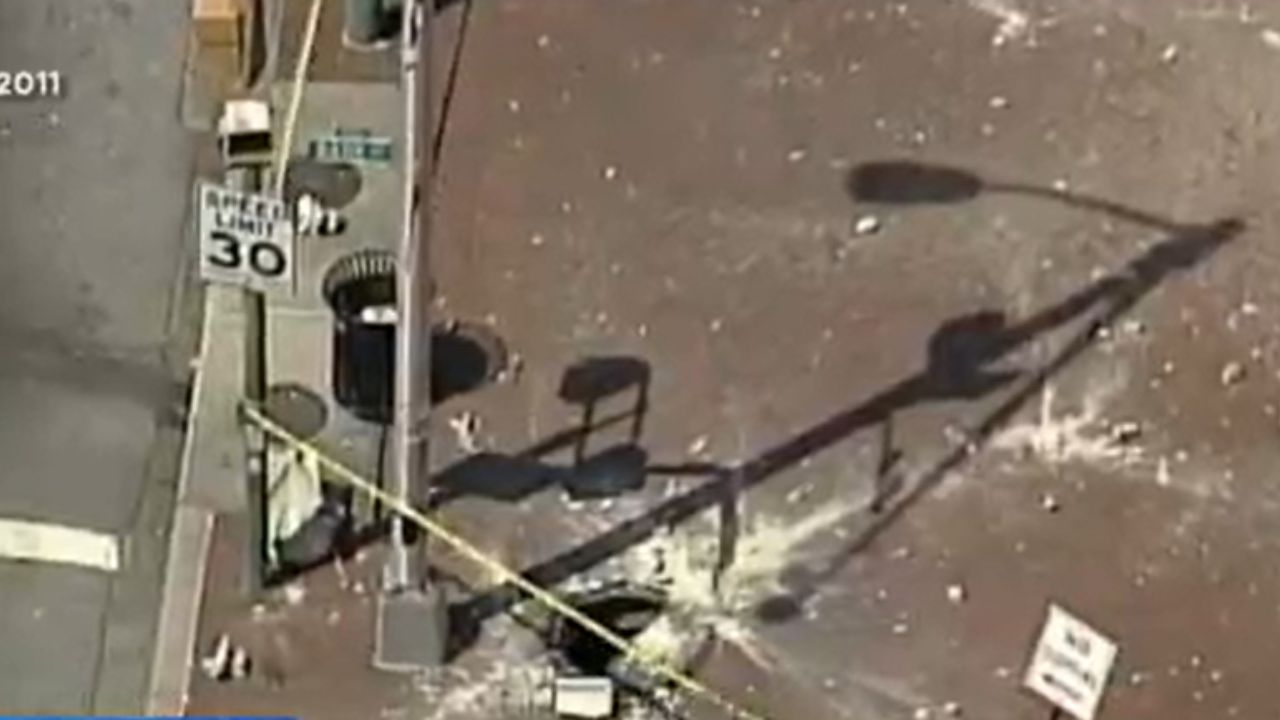
Fifteen years after a rare 5.8-magnitude earthquake struck Virginia, the shaking that reached Maryland and much of the East Coast remains one of the region’s most memorable natural disasters.
At 1:51 p.m. on Aug. 23, 2011, the earthquake struck near Mineral in Louisa County, Virginia, about 90 miles southwest of Washington, D.C. The earthquake was the largest recorded in the eastern United States since 1944 and was felt across a remarkably wide portion of the country.
In Maryland, the shaking was strong enough to damage historic buildings and disrupt normal life. In Baltimore, the Basilica of the National Shrine of the Assumption of the Blessed Virgin Mary suffered cracks in its masonry and domes. The Archdiocese of Baltimore later reported that inspections found damage to the brick structure, leading to repairs that included the installation of stainless steel rods.
The earthquake also caused the steeple of a church in Baltimore’s Fells Point neighborhood to collapse. Across downtown Baltimore, many people left high-rise buildings and gathered outside while they tried to understand what had happened.
For some residents, the first few minutes were marked by confusion.
“Everything was shaking. We didn’t know what was going on and things were falling,” one Baltimore resident recalled in an interview with CBS News Baltimore.
Another resident described the moment inside a building as people suddenly stopped what they were doing and asked one another whether they had felt the shaking.
The effects stretched far beyond Maryland.
According to the U.S. Geological Survey, the earthquake was felt by approximately one-third of the U.S. population. Reports came from areas extending from Maine to Georgia and as far west as parts of the Midwest and Canada.
Washington, D.C., suffered significant damage to several prominent landmarks. The Washington Monument sustained cracks, displaced stones and damaged joints and was closed while engineers assessed the structure. The National Cathedral and the Smithsonian Institution Building, commonly known as the Castle, also suffered damage.
The National Park Service later estimated the cost of repairing the Washington Monument at about $15 million. The monument was surrounded by scaffolding during the extensive repair work before eventually reopening.
The earthquake’s effects were especially notable because it occurred in the eastern United States, where damaging earthquakes are less frequent than in the West. USGS scientists have since used the 2011 event to better understand how seismic waves travel through the older, denser rocks beneath the eastern U.S.
Those geological conditions help explain why a magnitude 5.8 earthquake centered in central Virginia could be felt hundreds of miles away.
The USGS estimates that total economic losses from the earthquake were between $200 million and $300 million. Damage was recorded in communities close to the epicenter as well as in major cities farther away, including Washington and Baltimore.
The earthquake also prompted temporary evacuations of buildings throughout the Mid-Atlantic. The North Anna nuclear power station in Virginia, located relatively close to the epicenter, was shut down after the shaking.
Fifteen years later, the Aug. 23, 2011, earthquake remains an important reminder that the eastern United States is not immune to damaging seismic activity. What began as a brief earthquake near Mineral, Virginia, quickly became an event remembered across Maryland, Washington and communities throughout the East Coast.
