

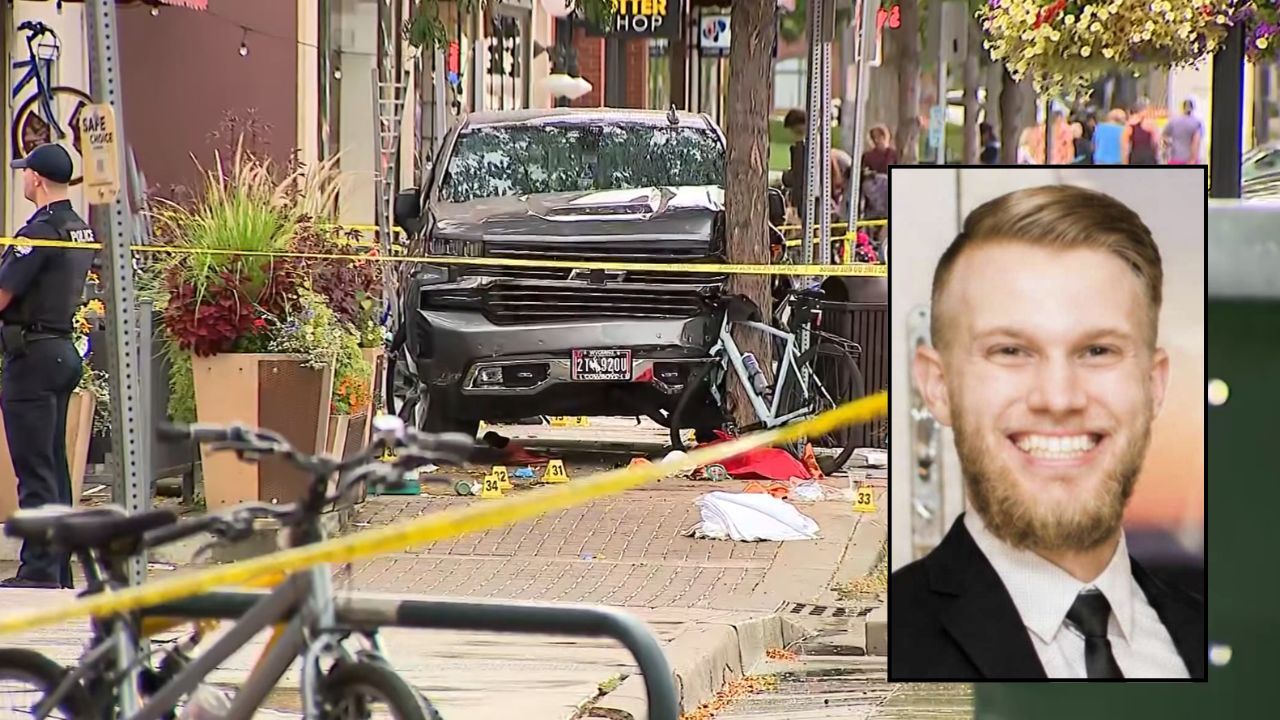
A summer afternoon in downtown Fort Collins, Colorado, turned deadly after a pickup truck struck a group of pedestrians gathered near an ice cream shop. One man died, several others were injured, and investigators later uncovered vehicle data that raised serious questions about what happened moments before the crash.
Van Lemaster, 88, of Cheyenne, Wyoming, faces felony vehicular homicide and four counts of vehicular assault, along with two misdemeanor counts of reckless endangerment, in connection with the Aug. 29, 2026, collision. The victim, 33-year-old Joshua Douglass, died after being struck by the truck.
According to investigators, the crash happened as the city was hosting Tour de Fat, an annual cycling event known for its costumed bicycle parade and festival atmosphere. Cyclists and pedestrians were moving through the area as Lemaster prepared to leave a restaurant with a woman who was accompanying him.
What began as an attempt to pull out of a parking space allegedly escalated into a devastating collision involving multiple people.
How the crash unfolded
Court documents describe Lemaster attempting to back his Chevrolet Silverado out of a parking space while navigating nearby cyclists. During the maneuver, the truck struck a Nissan Altima, according to investigators.
A witness told police that Lemaster then shifted the truck into drive and revved the engine aggressively.
Investigators allege that the pickup jumped the curb, struck bicycles and hit a handicapped parking sign before continuing toward a group of pedestrians.
Douglass and his girlfriend were among those struck. According to the court documents, one person was thrown into the outdoor seating area of a nearby ice cream shop. Douglass was dragged beneath the truck until it stopped, investigators said.
The vehicle also struck two additional people, with one person reportedly thrown onto another individual who had already been knocked down.
The collision left multiple people injured and claimed Douglass’ life. Lemaster also suffered a head injury and was taken to a hospital for treatment. Douglass was transported to a hospital, where he was pronounced dead.
The incident happened in an area where cyclists and pedestrians had gathered for the annual event, making the crash especially alarming for people enjoying the day.
Vehicle data revealed a critical detail
One of the most significant findings emerged when investigators examined data recorded by the Chevrolet Silverado.
According to the court documents, the pickup was equipped with an automatic emergency braking system. The system reportedly detected Douglass and other pedestrians and activated its alert-and-braking function as the truck approached them.
However, investigators said the vehicle data showed that Lemaster continued pressing the accelerator pedal at approximately 99% while the automatic braking system was engaging.
Authorities allege that the continued acceleration overrode the braking intervention, allowing the truck to keep moving into the group.
The finding became a central part of the investigation because it suggested that the vehicle’s safety technology had detected the danger before the collision occurred.
Automatic emergency braking systems are designed to help drivers avoid or reduce the severity of certain crashes by applying the brakes when a potential collision is detected. Some systems also include pedestrian detection, although their capabilities vary by vehicle and operating conditions.
These technologies are designed to assist drivers, not replace their responsibility to control a vehicle. Their performance can depend on factors such as speed, sensor detection and the circumstances surrounding a potential collision.
In this case, investigators concluded that the vehicle’s braking system had activated and that the truck did not have a mechanical defect that explained the crash.
Police have not publicly established a precise motive for Lemaster’s alleged acceleration. The available findings instead led investigators to characterize the driving as reckless.
Investigators ruled out intoxication
Authorities said Lemaster was not intoxicated at the time of the collision. Investigators also ruled out vehicle impairment caused by a mechanical defect.
Those findings narrowed the issues surrounding the crash but did not, by themselves, establish every detail of what happened inside the truck.
The investigation relied in part on witness accounts and the vehicle’s recorded data to reconstruct the sequence of events. Such information can help investigators compare a driver’s actions with the vehicle’s response in the moments before a collision.
The reported accelerator-pedal data was particularly important because it provided information beyond what witnesses could observe from outside the vehicle.
Even so, the criminal allegations remain subject to the legal process. Lemaster has been charged, and the charges do not constitute a conviction.
What happened after the collision?
The Fort Collins Police Department announced on Oct. 16 that it had completed its investigation and presented the case to the Larimer County District Attorney’s Office for review.
Prosecutors accepted one count of felony vehicular homicide, four counts of felony vehicular assault and two counts of misdemeanor reckless endangerment.
Lemaster was booked into the Larimer County Jail on Oct. 16. Reports indicated that his bond was set at $75,000, and his next court appearance was scheduled for Oct. 22.
The case now moves through the criminal justice system, where the allegations and evidence will be addressed through court proceedings.
A deadly reminder about pedestrian safety
The crash highlights how quickly a busy public gathering can become dangerous when a vehicle enters an area occupied by pedestrians and cyclists.
Tour de Fat brings together cyclists, spectators and community members in a festival environment. In such settings, drivers must remain alert to people moving around parked vehicles, street crossings and event-related activity.
Safety technology can provide an additional layer of protection, but it cannot guarantee that every collision will be prevented. Drivers still need to control acceleration, monitor their surroundings and respond appropriately when a warning or emergency braking intervention occurs.
For the people involved in the Fort Collins crash, those safety questions are now tied to a tragic outcome: the death of Joshua Douglass and injuries to others who were gathered nearby.
As the case proceeds, investigators’ findings about the truck’s acceleration and braking system are likely to remain important parts of the evidence used to determine responsibility for the deadly collision.
