

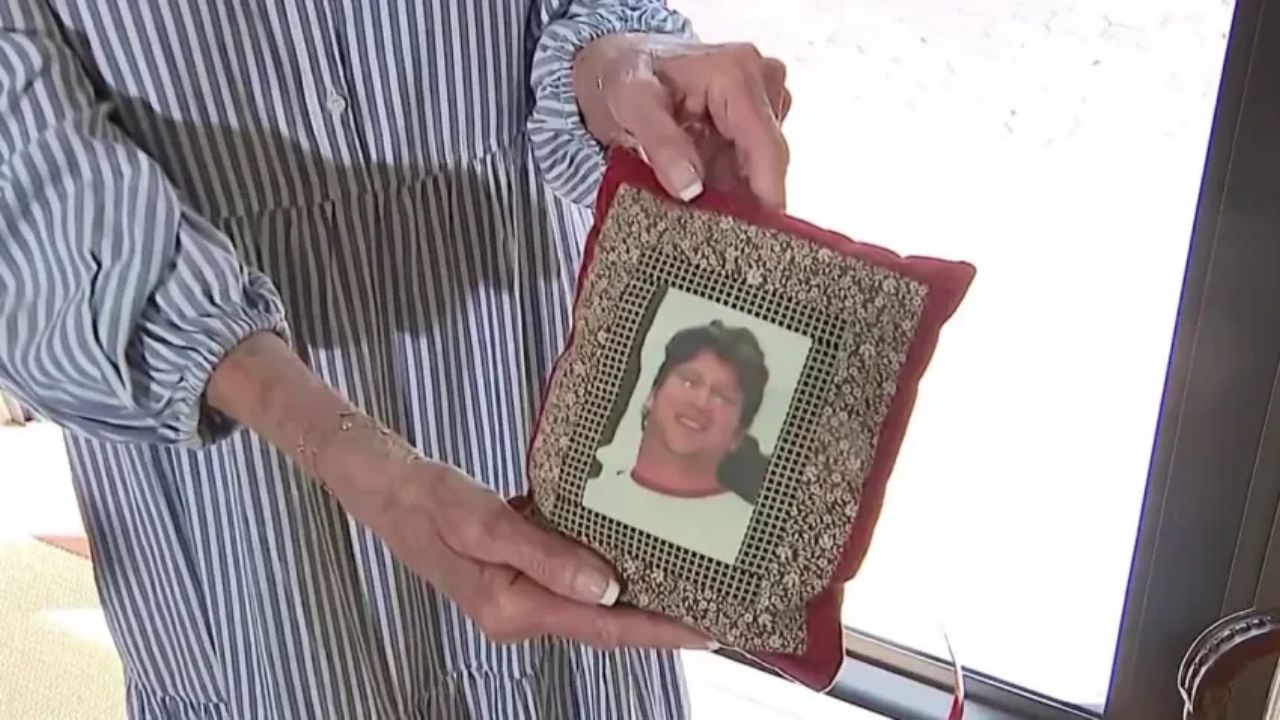
Twenty-five years after the September 11 attacks, Sue Rosenblum still has reminders of her youngest son throughout the Coral Springs home where she has continued to live.
Joshua Rosenblum was 28 when he went to work at Cantor Fitzgerald on Sept. 11, 2001. He was expected to leave the following day with his fiancée, Gina Hawryluk, for Bermuda, where they planned to be married on Sept. 15.
Instead, that morning became the last time his family would ever hear from him.
Joshua was among the nearly 3,000 people killed in the attacks. His remains were never recovered, but his name is engraved at the National September 11 Memorial in New York, where his memory remains part of the permanent record of those who were lost.
For his mother, however, Joshua has never been only a name on a memorial.
‘It becomes a little more rounded’
Rosenblum has spent the past quarter century learning how to live with a loss that never completely disappears.
She does not describe grief as something that simply heals with time. Instead, she compares it to an injury whose sharpness gradually changes.
“At first,” she recalled, the pain felt like a sharp edge. Over the years, that edge became more rounded and less overwhelming.
In the earliest days after the attacks, she received letters and phone calls from people she had never met. At a time before texting and social media were part of everyday life, strangers somehow found a way to reach her.
Those messages gave her a feeling that she and other families were not facing the tragedy alone.
For Rosenblum, some of the smallest gestures eventually became part of the process of moving forward. Among the keepsakes she has held onto is a quilted pillow featuring a picture of Joshua, a gift from someone she did not know.
It is one of many reminders that his life touched people beyond the family who knew him best.
Joshua’s life before Sept. 11
Joshua worked at Cantor Fitzgerald at the World Trade Center and was preparing to begin a new chapter of his life with Hawryluk.
A recently published memorial biography recalls how close Joshua had become to Hawryluk’s young daughter, Zoe. Two weeks before the couple’s planned wedding, Joshua took Zoe crabbing in New Jersey. When the child finally caught a crab large enough to keep, Joshua called it a “keeper,” a moment Hawryluk later remembered as a glimpse of the gentle person he was.
Those memories have become part of the story his family continues to tell.
The attacks also left a lasting connection between South Florida and the events of that morning. In the weeks after 9/11, investigators learned that several of the hijackers had spent time in the region before the attacks. Mohamed Atta and Marwan al-Shehhi lived for a period in Hollywood and trained in the area, including at flight facilities in South Florida. Their presence later became one of the unsettling details residents remembered about the months leading up to the attacks.
That history has remained part of South Florida’s own 9/11 story.
A photograph at the museum
Among the memories Rosenblum has kept is a photograph from former President Barack Obama’s visit to the National September 11 Memorial & Museum.
In the picture, Obama is standing near an image of Joshua.
For a mother who has spent 25 years carrying the memory of her son, moments like that can still feel difficult to comprehend.
His name is among those preserved at the memorial, ensuring that Joshua Rosenblum is remembered not simply as one of thousands who died, but as an individual whose life had its own plans, relationships and future.
A country that changed
The 25th anniversary of the attacks has brought renewed remembrance across South Florida and the country.
Communities throughout the region held ceremonies, tributes and commemorations on Sept. 11, 2026, marking a quarter century since the attacks and honoring both those who died that day and those whose lives were changed by what followed.
For Rosenblum, remembering 9/11 also means remembering someth
