

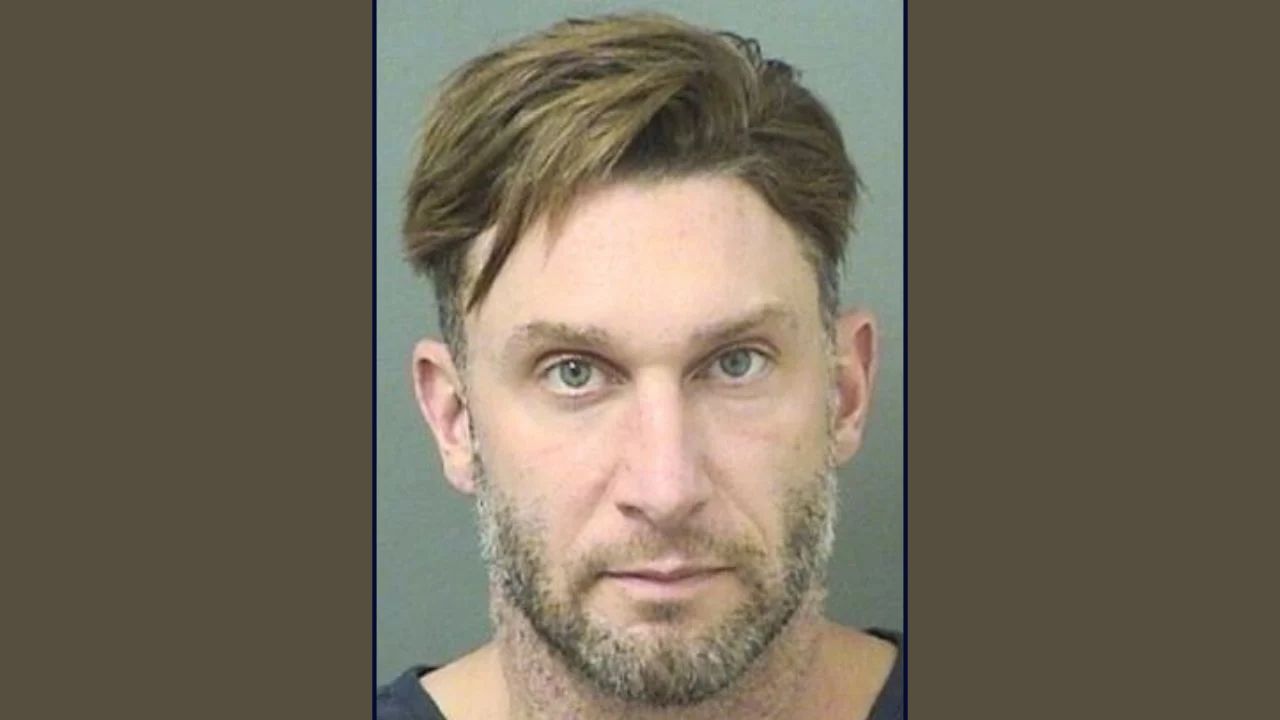
A Florida attorney is facing multiple criminal charges after allegedly entering his former girlfriend’s home without permission and sending her a series of alarming messages from inside the residence, according to police.
Andrew Inserra, 41, a personal injury attorney based in Fort Lauderdale, allegedly entered the woman’s Boca Raton home on June 2, one day after the couple ended their relationship. Investigators say he then sent her photographs of the home’s interior, repeatedly called her and sent messages claiming he was waiting for her to return.
Among the messages attributed to Inserra were statements that he was sitting on her gray couch and was “f—ing waiting,” according to a probable cause affidavit.
The woman told investigators she had not invited him to the property and did not know how he had entered. The allegations prompted an investigation that included a review of text messages, photographs and location data from Inserra’s phone.
He was charged with burglary of an unoccupied structure, aggravated stalking and false personation after allegedly impersonating a police officer or dispatcher.
The charges stem from allegations that began months before his reported arrest in October. Authorities have not publicly clarified why the arrest occurred several months after the June incident.
A breakup followed by a disturbing discovery
According to the affidavit, the woman and Inserra had ended their relationship on June 1. The following evening, she allegedly received a photograph of her bathroom from him, even though she had not agreed to meet him or allowed him into her home.
Investigators said the residence’s front door and living room sliding door were secured. However, a sliding door in the bedroom had been left unlocked.
The photograph immediately raised questions about whether Inserra had entered the home without her knowledge.
Police later examined his phone and allegedly found several photographs taken inside the residence that evening. The images reportedly showed parts of the property, including the exterior sliding doors, front door, kitchen island and bathroom.
One photograph of the bathroom floor carried a timestamp of 6:48 p.m. Investigators said it matched the image sent to the woman.
Location data associated with the photographs allegedly placed the phone at her residence. Police also reported finding no message in the relevant text conversations in which the woman invited Inserra to visit.
Those details became important to the investigation because they appeared to contradict the suggestion that the visit had been arranged or welcomed.
Hundreds of calls and messages alleged
The affidavit describes an extensive series of attempts to contact the woman after the breakup.
In one conversation thread, Inserra allegedly sent 108 messages and made 30 attempted calls. A separate thread reportedly contained another 65 messages that received no response, along with 77 calls.
The messages allegedly included statements indicating that he was inside the home and waiting for her to return.
One message reportedly asked where the police were, while questioning why she had not arrived. Other messages allegedly repeated that he was sitting on her gray couch.
According to investigators, the woman had not given him permission to enter the residence. The volume of messages and calls became another part of the evidence reviewed by police.
Repeated unwanted contact can be relevant in stalking investigations, particularly when authorities are examining whether the conduct caused a person to fear for their safety. In this case, prosecutors have brought an aggravated stalking charge, although the allegations must still be addressed through the legal process.
Police impersonation allegations add another charge
Investigators also alleged that Inserra attempted to communicate with his former girlfriend while pretending to be a Boca Raton police dispatcher.
According to the affidavit, the messages included attempts to assume the identity of someone associated with law enforcement.
The woman reportedly told Inserra to stop contacting her and said she intended to seek a restraining order.
The alleged impersonation became the basis for the false-personation charge. Authorities have not established the allegations through a conviction, and the charge remains subject to court proceedings.
The combination of alleged unauthorized entry, persistent communications and impersonation prompted investigators to examine both the physical evidence from the home and the digital records on Inserra’s phone.
What Inserra told investigators
Police interviewed Inserra on June 3 while he was in custody on an unrelated traffic infraction.
After being advised of his constitutional rights, he initially told investigators that the bathroom photograph was an older image and that he had spent the evening at home, according to the affidavit.
He later claimed that the woman had invited him to visit, investigators said.
Inserra reportedly declined to provide the passcode to his phone but confirmed that the device belonged to him and was the only phone he regularly used.
Investigators subsequently reviewed the photographs and associated location information as part of their effort to establish when the images were taken and where the phone was located.
The records, along with the alleged messages and call history, formed part of the evidence supporting the charges.
Three charges in the case
Inserra faces three types of criminal allegations connected to the incident:
- Burglary of an unoccupied structure: The allegation concerns entering the former girlfriend’s residence without authorization.
- Aggravated stalking: Investigators cite the alleged pattern of repeated calls, messages and other unwanted conduct.
- False personation: This charge stems from the allegation that he pretended to be a police officer or dispatcher.
The precise legal issues in each charge will be determined through the court process. The allegations in the affidavit describe investigators’ account of the events, rather than a final finding of guilt.
It also remains unclear why authorities arrested Inserra in October in connection with an incident that allegedly occurred in early June.
A case involving digital evidence and personal boundaries
The investigation illustrates how digital records can become central to cases involving alleged stalking and unauthorized entry.
Photographs, timestamps, location information, call logs and text messages can help investigators reconstruct a sequence of events. They may also be used to compare a person’s account with other available evidence.
At the same time, the legal significance of those records depends on the full circumstances and how the evidence is evaluated in court.
For people dealing with unwanted contact after a breakup, the allegations also highlight the importance of documenting concerning communications and seeking help when personal boundaries are ignored. Anyone who believes someone has entered their home without permission or poses an immediate threat should contact local law enforcement.
The case against Inserra remains centered on the allegations surrounding the June 2 incident, including whether he entered the residence without permission, repeatedly contacted his former girlfriend and impersonated a law enforcement official. The court proceedings will determine how those allegations are resolved.
