

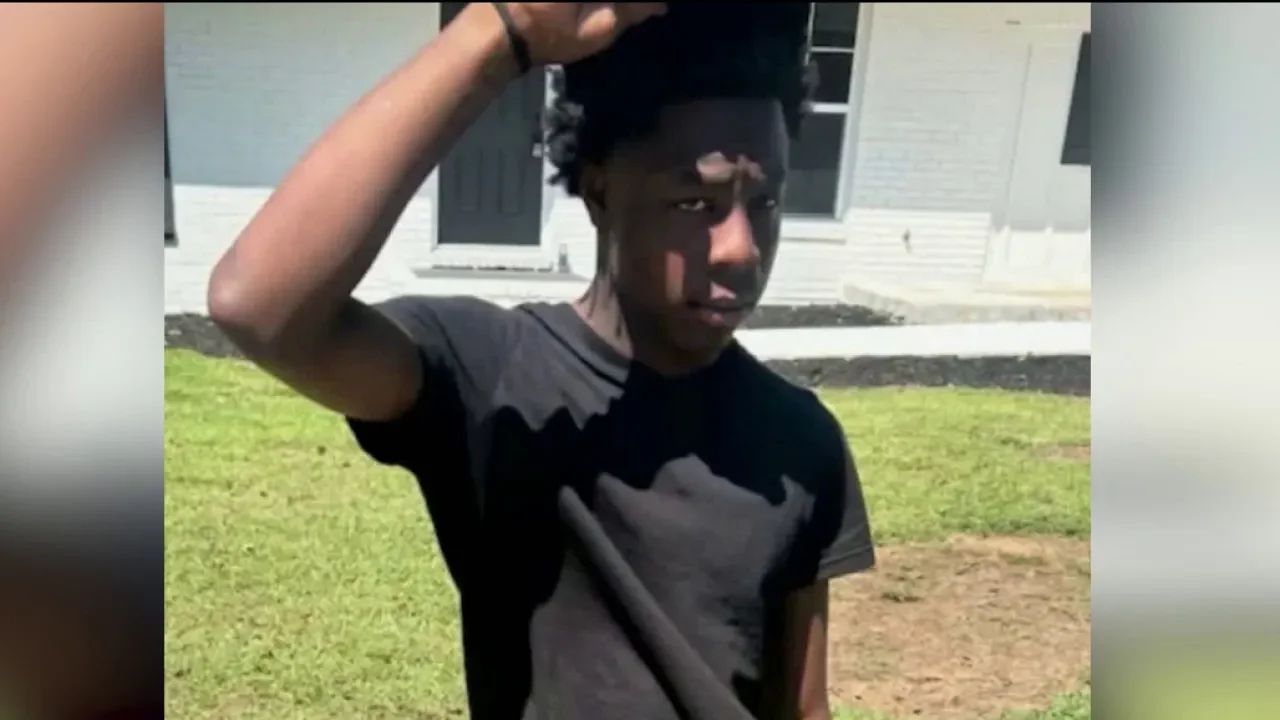
The family of an 18-year-old who died after being shot by a police officer in Newnan, Georgia, is seeking answers about what happened during the early-morning encounter. Now, with prominent civil rights attorneys Ben Crump and Harry Daniels representing them, the case is drawing renewed attention to conflicting accounts of the fatal shooting.
Zadarious Dorsey died after a confrontation with a Newnan Police Department officer shortly after 1 a.m. on October 3, 2026, near Cliff Circle. The Georgia Bureau of Investigation is conducting an independent investigation into the shooting.
The two sides disagree on a central question: whether Dorsey was armed when the officer fired.
Investigators say the officer saw Dorsey pull a handgun from his waistband during a foot pursuit. His family’s attorneys dispute that account, saying their review of video footage indicates he was unarmed when he was shot.
The conflicting claims have left Dorsey’s relatives demanding more information about the encounter, including the circumstances that led to the pursuit and the decision to use deadly force.
How the fatal encounter unfolded
According to preliminary information released by the Georgia Bureau of Investigation, the incident began when a Newnan police officer spotted a white car near the intersection of Dodson Street and Martin Luther King Jr. Drive.
The officer followed the vehicle until it stopped on Cliff Circle. When the officer approached and attempted to speak with the driver, five men exited the car. One walked toward a nearby home, while the other four ran away.
The officer pursued Dorsey on foot and repeatedly ordered him to stop, investigators said. During the chase, the officer deployed a Taser, but it was ineffective.
Investigators said the officer then saw Dorsey pull a gun from his waistband and ordered him to drop it before firing multiple shots.
Officers provided medical assistance before Dorsey was taken to a nearby hospital, where he later died. A handgun was recovered at the scene, according to investigators. No officers were injured.
The GBI has not publicly released a final determination about the shooting. Its investigation is intended to establish the facts surrounding the encounter before the case is referred to prosecutors for review.
Attorneys challenge the police account
Crump and Daniels announced that they had taken on the family’s case, offering a sharply different interpretation of the events leading up to the shooting.
The attorneys contend that the officer followed the vehicle without activating emergency blue lights and that the encounter did not begin as a lawful traffic stop. They also dispute the suggestion that Dorsey was suspected of a crime before the officer pursued him.
Based on their review of video footage, the attorneys argue that Dorsey was unarmed when he was chased and shot.
In a statement, the legal team criticized the officer’s actions and called for accountability, arguing that Dorsey’s death raises serious questions about the circumstances in which police may use deadly force.
The family’s position directly conflicts with the preliminary account provided by investigators. The publicly available information does not yet resolve that disagreement.
Video evidence could become particularly important as the investigation continues. Footage may help establish the sequence of events, what the officer could see during the pursuit and whether the accounts provided by the parties are supported by the available evidence.
However, the full body-camera footage and neighborhood surveillance recordings have not been publicly released, leaving key details unavailable for independent review.
Family remembers the teenager behind the headlines
While the investigation focuses on the events of October 3, Dorsey’s relatives are also coping with the loss of a young family member.
His aunt, Angela Brown, remembered him as her “safe place,” describing the close bond they shared and the love he brought into her life.
For the family, the unanswered questions go beyond the sequence of events. They want to understand why the encounter ended in a fatal shooting and whether it could have ended differently.
Their attorneys say they are examining the circumstances surrounding Dorsey’s death as they consider possible legal action.
The case has also placed renewed attention on the importance of transparency in officer-involved shootings, particularly when the initial police account is disputed by the family of the person killed.
Dorsey had pending criminal charges before his death
Court and jail records described in reporting about the case show that Dorsey had previous arrests and pending criminal charges before the fatal encounter.
In August 2026, a grand jury indicted him on charges including child molestation, statutory rape and battery. The allegations stemmed from a reported February incident in which authorities alleged that Dorsey and two other men held five girls, including a 14-year-old, at gunpoint inside an apartment.
Dorsey was reportedly released on a $20,000 bond and was scheduled to appear in court in connection with those charges.
Records also indicate that he had been arrested in October 2025 on charges that included loitering, tampering with evidence and possessing a firearm while under 18. He was also arrested in March 2026 on a marijuana possession charge.
These were allegations and charges, not proof of guilt. The information provided about the shooting also indicates that investigators did not believe the officer knew Dorsey’s identity or pursued him because of his prior criminal record.
The circumstances surrounding the October encounter therefore remain a separate question from the allegations in his earlier cases.
What investigators still need to establish
Several important details remain unresolved as the GBI continues its investigation.
Authorities have not publicly identified the officer involved in the shooting. Full body-camera footage and neighborhood surveillance video have also not been made available for public examination.
Investigators will need to assess the available evidence to establish the sequence of events, including the pursuit, the Taser deployment, the officer’s account of seeing a handgun and the use of deadly force.
The investigation may also help clarify the circumstances that led the officer to follow the vehicle in the first place.
Once the GBI completes its work, the findings will be submitted to the Coweta Judicial Circuit District Attorney’s Office for review. That review will help determine whether further legal action is warranted.
Meanwhile, Crump and Daniels are examining potential grounds for a civil rights lawsuit on behalf of Dorsey’s family. Any such case could raise questions about the officer’s conduct, the circumstances of the encounter and whether the use of force complied with applicable law.
A case awaiting answers
The hiring of high-profile civil rights attorneys marks a new stage in the family’s effort to understand Dorsey’s death. But their involvement does not determine what happened or establish whether the shooting was legally justified.
For now, the case rests on competing accounts: investigators say the officer saw Dorsey draw a gun, while his family’s attorneys argue that video evidence shows he was unarmed when he was shot.
Until more evidence is released and the independent investigation is completed, those differences remain unresolved.
For Dorsey’s family, the immediate goal is to obtain answers about the final moments of his life. The forthcoming investigative findings and any subsequent legal proceedings could play a central role in determining what happened that night and whether anyone should be held accountable.
