

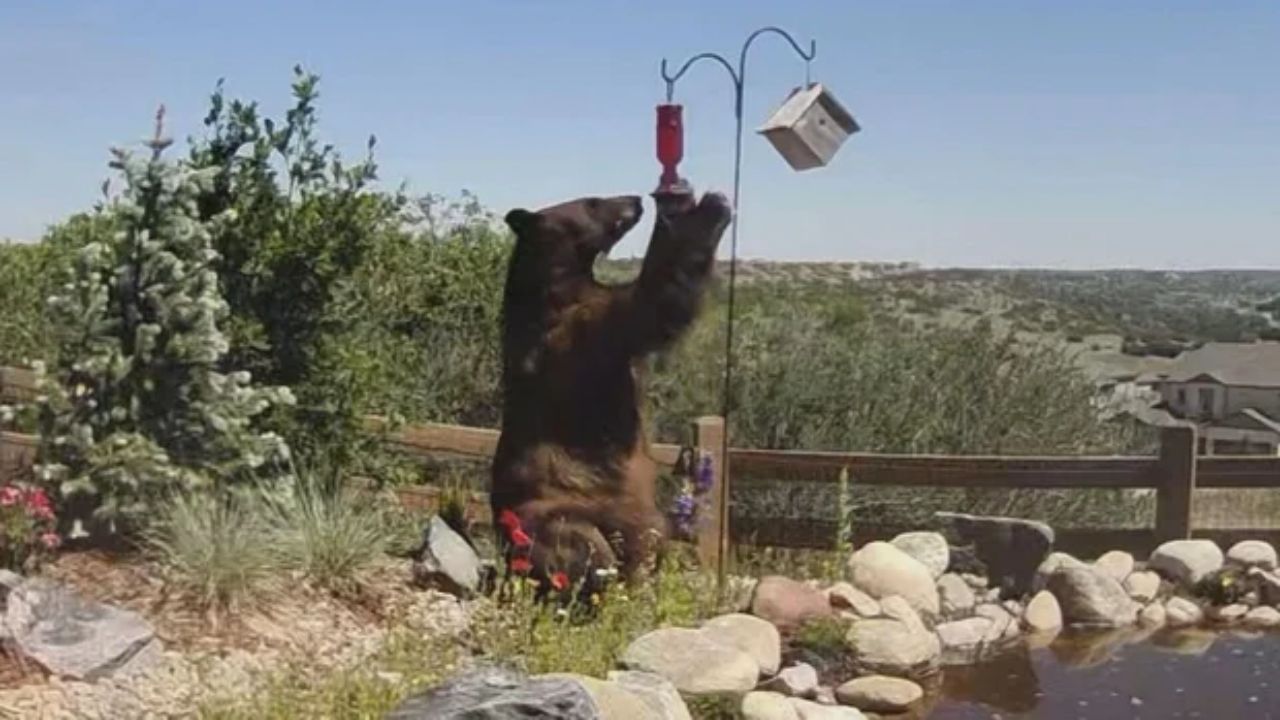
A Douglas County man is facing a felony animal cruelty charge after the fatal shooting of a mother bear known to residents near Castle Rock as “Melanie.” The July incident left her two cubs without their mother and sparked anger among neighbors who had grown accustomed to seeing the bear family near the Terrain neighborhood.
Neighbors Remember the Bear as Melanie
For people living in Terrain, the bear was more than a passing wildlife sighting. Residents had watched the mother bear move through the area with her two cubs so often that she became a familiar presence in the neighborhood.
Jeff Berta, who lives in Terrain, said residents had started calling her Melanie and thinking of her as their neighborhood bear.
On July 9, Berta heard loud noises from his home. When he and others looked outside with binoculars, they noticed Colorado Parks and Wildlife (CPW) officers responding to the scene.
Another nearby resident, Chad Schnuelle, recalled receiving a call from the sheriff asking for permission to access his property during the response.
Wildlife officers subsequently euthanized the injured mother bear, tranquilized her two cubs and transported them to a rehabilitation facility.
The incident upset residents who had become emotionally attached to the bear family. Berta said the loss felt like losing a member of the community, while Schnuelle expressed disappointment that the shooting had occurred.
Neighbor Faces Felony Animal Cruelty Charge
The investigation eventually led prosecutors to charge 37-year-old Calvin Lennberg with aggravated animal cruelty. Lennberg was identified as the alleged shooter, and the charge relates to the killing of the mother bear.
The offense is classified as a felony under Colorado law and covers conduct including the needless killing of an animal. According to the reported case details, a conviction could carry penalties ranging from probation to as much as six years in prison.
Schnuelle said he was surprised to learn that his neighbor was accused of the shooting. He described having had no previous problems with Lennberg and said he wanted to understand more about the circumstances surrounding the incident.
Berta, meanwhile, said the legal process should run its course and that anyone found responsible for wrongdoing should face the consequences.
The charge remains an allegation, and the case must proceed through the court system before guilt can be determined.
Lennberg is scheduled to make his first court appearance on October 23, 2026. Attempts to obtain his comment before the latest report were unsuccessful.
Bear Activity Creates Challenges for Colorado Residents
The case has also drawn attention to the difficulties of living alongside wildlife in Colorado, where bears regularly venture into residential areas in search of food.
Dry conditions can reduce the availability of natural food sources, potentially bringing hungry bears closer to homes and neighborhoods. Wildlife officials have also reported unusually high bear activity and an increase in bears being euthanized this summer.
According to Colorado Parks and Wildlife, many conflicts between people and bears begin when animals find easily accessible food around homes. Garbage, birdseed, pet food and unsecured livestock feed can attract bears and encourage them to return.
Once a bear repeatedly finds food near people, it may become less wary of residential areas. In some cases, this behavior can create safety concerns and lead to difficult decisions for wildlife officials.
Residents can reduce the risk of encounters by storing garbage securely, bringing pet food indoors, cleaning outdoor grills and protecting chicken coops with appropriate barriers or electric fencing.
Schnuelle said he had already taken steps to protect his home and chicken coop after previous encounters with bears that had taken his chickens. Rather than viewing every encounter as a reason to remove the animals, he adjusted his property to make it harder for bears to reach potential food sources.
Community Hopes to Prevent Future Bear Deaths
For neighbors who knew Melanie, the shooting has raised questions about how people can better share space with wildlife without putting animals or residents at risk.
Berta said he hopes the incident encourages greater awareness and helps people find ways to reduce the number of bears that ultimately have to be euthanized.
Both he and Schnuelle emphasized that bears are trying to survive and that residents have a role to play in preventing unnecessary conflicts.
As the criminal case moves forward, Melanie’s death remains a painful reminder for the Terrain community of the challenges that arise when wildlife and residential development overlap.
For residents, the hope is that better precautions, greater awareness and responsible wildlife management can help prevent similar incidents in the future.
