

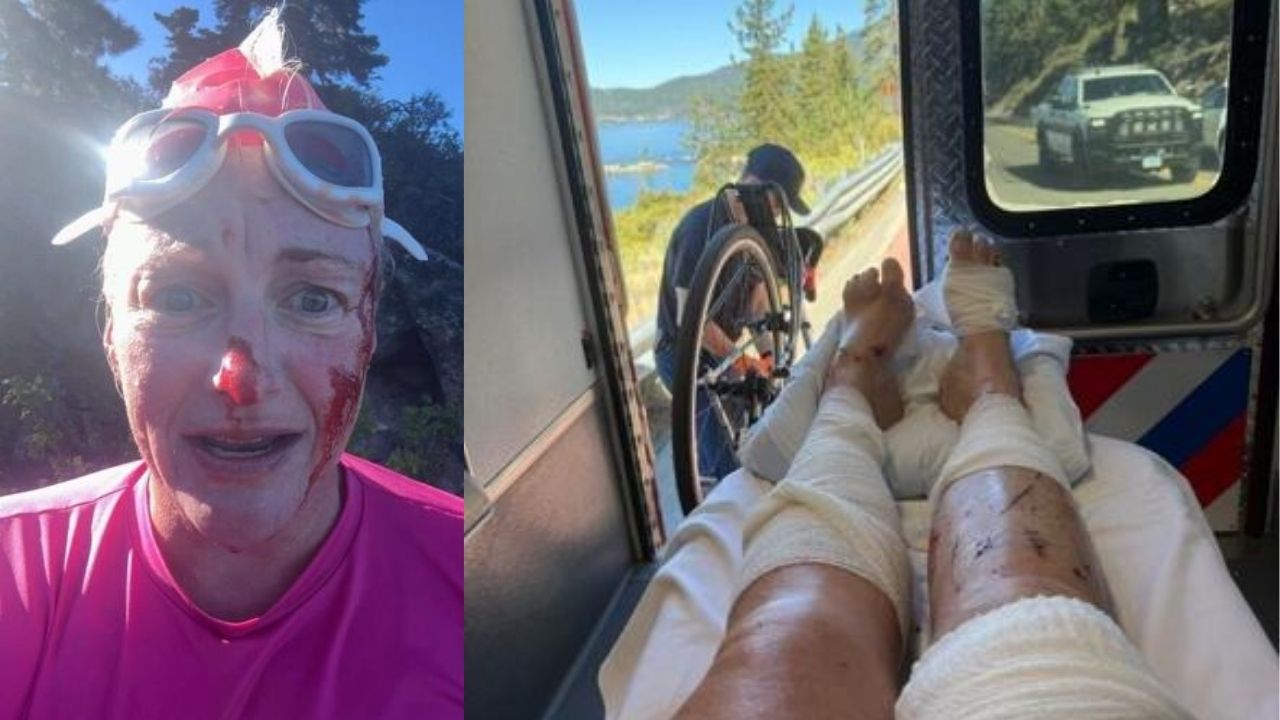
A routine Sunday morning swim in Lake Tahoe turned into a violent wildlife encounter for a Reno woman after a river otter attacked her near Hidden Beach.
Lynnette Bellin, an experienced open-water swimmer and swim instructor, was swimming along the lake’s east shore between Hidden Beach and Incline Village on Aug. 30 when something suddenly grabbed her leg and pulled her underwater.
At first, Bellin thought another person had grabbed her because of the force of the attack. She soon realized she was dealing with a river otter.
The animal continued biting and scratching as Bellin tried to get away. She fought back while attempting to reach the shoreline and eventually made it to a group of rocks.
Even after she got out of the water, Bellin said the otter remained nearby and continued circling the rocks. She eventually made her way to the East Shore Trail, where people noticed her injuries and helped get emergency assistance.
Bellin was taken for medical treatment and suffered numerous bite and scratch wounds. She received 38 stitches, including 22 stitches in one of her feet, and began rabies post-exposure treatment because the animal could not be captured and tested.
Attack happened during a familiar swim
Bellin said she had been swimming the same stretch of Lake Tahoe every Sunday since July. She is also a lifelong swimmer and operates a swim safety and rescue school in the Reno-Tahoe area.
The encounter was particularly startling because she had spent years swimming in Tahoe without experiencing anything similar. She said the attack lasted several minutes as she tried to keep the animal away and reach safety.
After reaching the trail, Bellin was covered in blood and injuries. People along the path helped her return toward the area where she had left her bicycle, where police, firefighters and an ambulance responded.
The incident was then reported to wildlife officials.
Otter was not found after search
The Washoe County Sheriff’s Office searched the area Sunday for the animal, but it had not been located as of the following morning.
Nevada wildlife officials said North American river otters are native to the Tahoe basin and surrounding waterways. Although encounters between people and otters are uncommon, the animals can become aggressive when they feel threatened or stressed.
Wildlife officials also said otters are present throughout the Tahoe basin and connected waterways, with their population increasing in the region over recent years.
The last documented otter attack known to Nevada wildlife officials occurred at Serene Lakes, California, in 2023.
Because the otter involved in the Tahoe attack has not been captured or tested, officials have not said whether rabies played any role. Bellin’s medical treatment includes rabies post-exposure care as a precaution following the bite exposure.
The Centers for Disease Control and Prevention recommends prompt medical assessment after possible rabies exposure from an animal and says post-exposure treatment can include wound care, rabies immune globulin and a series of vaccinations, depending on the circumstances.
Wildlife officials urge swimmers to give otters space
River otters generally avoid people, making an attack like Bellin’s unusual. Wildlife officials advise people who encounter an otter in the water to give the animal space and leave the area rather than approaching or attempting to interact with it.
For Bellin, the encounter has changed how she thinks about swimming in Lake Tahoe. She said the lake remains one of her favorite places, but the experience may influence where she chooses to swim in the future.
There is also an unusual connection between Bellin and the animal that attacked her. As a swim instructor, she has used a small otter toy during lessons with children.
After what happened in Lake Tahoe, she may think twice before bringing that toy back to class.
