

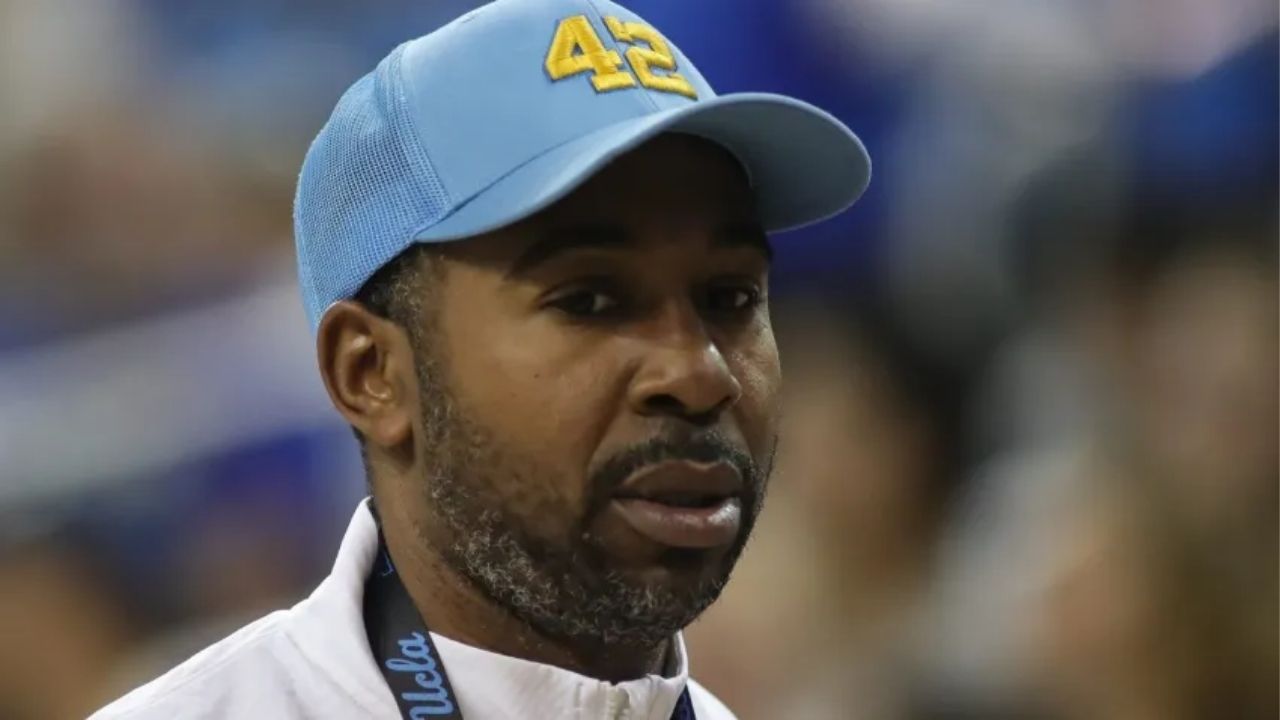
UCLA has removed Martin Jarmond as athletic director after more than six years in the position and appointed longtime Los Angeles Lakers executive Tim Harris as the university’s new CEO and director of athletics.
The leadership change was announced Monday by UCLA Chancellor Julio Frenk, who said the university needs a new approach to running its athletic department as college sports continue to undergo major financial and structural changes.
Jarmond’s departure is effective immediately.
Harris, 64, returns to UCLA in a leadership role after spending more than three decades with the Lakers. He is a 1989 UCLA graduate who earned a sociology degree and played goalkeeper for the Bruins men’s soccer team.
His new position will be performed on a pro bono basis, according to the university.
Financial pressure weighs on UCLA Athletics
The change comes as UCLA continues to deal with significant financial pressure within its athletic department.
The department has posted an operating deficit in each of the past seven fiscal years, with combined shortfalls reaching about $241 million. The deficit improved to $21.6 million for the 2025 fiscal year, but the athletic program has continued to rely on financial support from the university.
UCLA’s move to the Big Ten has brought substantially greater media-rights revenue, but it has also increased travel and other operating costs. The financial demands of competing across a national conference have added another challenge as the university works to build a more sustainable athletics model.
Frenk pointed to those financial concerns as a major reason for the leadership change. He said UCLA wants an athletics operation capable of supporting its programs through the revenue it generates while continuing to provide opportunities for student-athletes and coaches.
The broader college sports landscape has also changed rapidly, particularly with name, image and likeness opportunities and new forms of athlete compensation becoming central to athletic department planning.
Harris brings long Lakers experience to UCLA
Harris spent more than 35 years with the Lakers, where he became a longtime senior executive involved in the organization’s business operations.
He left the NBA franchise in February, several months after the Lakers were sold by the Buss family to a group led by Los Angeles Dodgers owner Mark Walter.
His return to UCLA gives the university an administrator with extensive experience operating a major professional sports organization while also having a personal connection to the school.
That combination could be particularly important as UCLA attempts to balance the commercial demands of Big Ten competition with the university’s broad Olympic sports program.
Jarmond’s tenure included major athletic success
Jarmond became UCLA’s athletic director in 2020 after succeeding Dan Guerrero.
His tenure included the Bruins’ move from the Pac-12 to the Big Ten, a transition that significantly changed UCLA’s competitive and financial landscape.
Despite the challenges surrounding the athletic department’s finances and football program, UCLA teams achieved substantial success in other sports during Jarmond’s tenure.
The Bruins won three NCAA championships during the most recent academic year, including the women’s basketball program’s first national championship. Across his tenure, UCLA teams captured numerous national titles and conference championships.
Football, however, remained a major challenge.
Jarmond’s final major football hire was Bob Chesney, who arrived from James Madison in December with the task of rebuilding a program that had struggled in recent seasons.
Chesney’s first season begins with UCLA scheduled to open against California on Saturday.
Jarmond will not be in the athletic director’s position when that season gets underway.
UCLA begins a new chapter
Frenk said the university wants UCLA Athletics to do more than simply adapt to the changes taking place across college sports.
The immediate challenge for Harris will be managing the department’s finances while maintaining the competitiveness of UCLA’s teams and adapting to the evolving rules surrounding athlete compensation, NIL and revenue generation.
For UCLA, the leadership change represents a significant shift at a time when the university is trying to establish a sustainable model for its athletic department without sacrificing the breadth of its sports programs.
Harris now takes over with the task of helping shape that next phase.
