

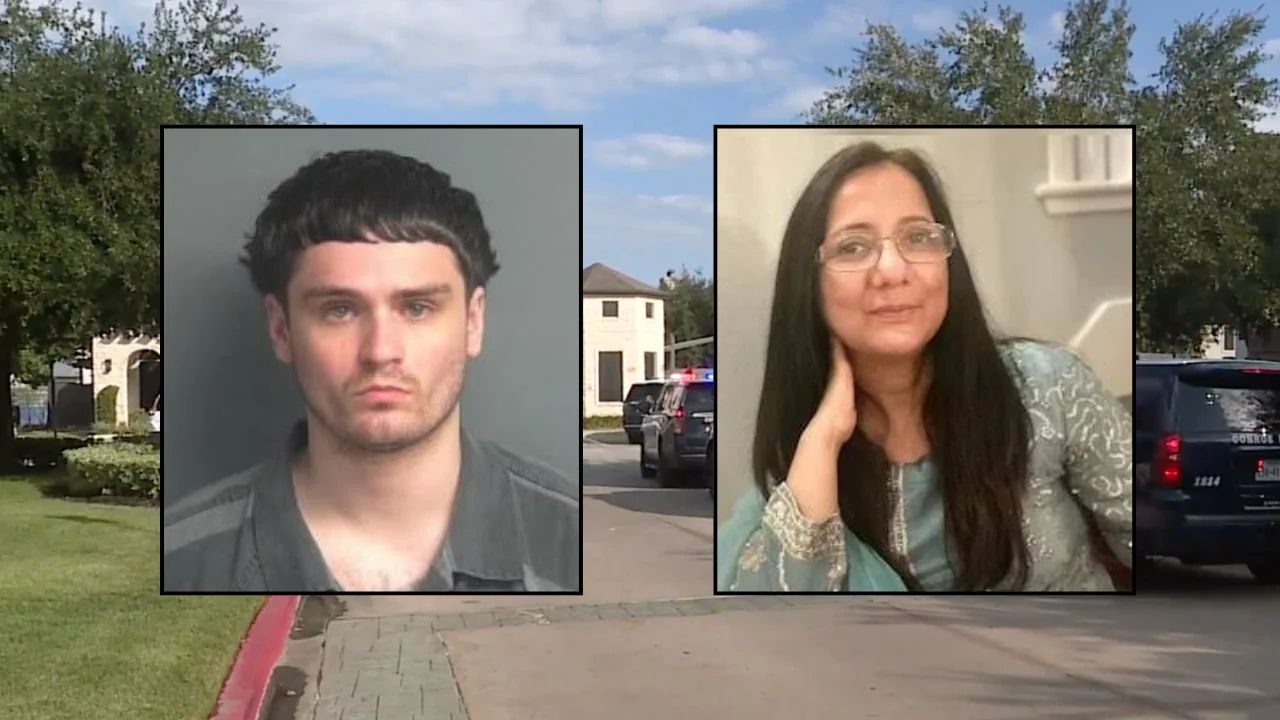
A quiet afternoon outside a Texas apartment complex became the scene of a horrific killing when a pediatrician was attacked while sitting at a picnic table. Several neighbors, including children, witnessed the violence. Even more disturbing were eyewitness accounts describing how the attacker reportedly checked the woman’s pulse before stabbing her again.
Nearly three years after the killing, the case has reached a major turning point. Miles Joseph Fridrich, now 27, has been sentenced to life in prison for murdering 52-year-old Dr. Talat Jehan Khan in Conroe, Texas.
A Montgomery County jury handed down the sentence on October 29, 2026, after Fridrich pleaded guilty to murder. The decision brings the criminal case closer to a conclusion, although it cannot undo the loss experienced by Khan’s family.
What happened outside the apartment complex?
The fatal attack happened on October 28, 2023, at the Alys Apartments on Mansions View Drive in Conroe.
Khan was sitting at a picnic table in the shared outdoor area of the apartment complex. She was spending time with her dog and talking on the phone when Fridrich allegedly approached and began stabbing her.
The attack happened in broad daylight, leaving nearby residents shocked. Several people witnessed what was happening, including young children who were in the common area.
When police received reports of a disturbance involving a weapon, officers rushed to the apartment complex. They found Khan suffering from multiple stab wounds.
Emergency responders attempted lifesaving measures, but she was pronounced dead at the scene.
Fridrich had reportedly left the area on foot before officers arrived. Police established a perimeter and located him a short distance from the apartment complex. He was subsequently taken into custody.
Witness describes a disturbing moment during the attack
One of the most unsettling details emerged from accounts given by people who witnessed the incident.
A neighbor described seeing Fridrich repeatedly leave and return during the attack. According to the witness, the suspect appeared to check Khan’s pulse before stabbing her three additional times.
The witness also described Fridrich’s expression as unusually blank and frightening.
Another resident said the attack appeared to happen without warning while Khan was sitting outside with her dog.
A neighbor who heard or witnessed the commotion reportedly grabbed a katana sword and moved toward the suspect. His intervention appeared to startle Fridrich, who then left the area.
The accounts painted a picture of a sudden and terrifying incident in a place where residents would normally expect to feel safe.
Medical testimony revealed the extent of the injuries
During the punishment phase of the case, jurors heard additional details about the severity of Khan’s injuries.
Medical examiner testimony reported during the proceedings indicated that she suffered 71 stab wounds. Some of the injuries damaged major blood vessels in her neck and her spinal cord.
The testimony helped explain the severity of the attack and the devastating injuries that led to her death.
The case also involved questions about Fridrich’s mental health and his ability to stand trial.
His defense raised concerns about his psychological condition, including reported episodes of paranoia and problems associated with drug use and medication.
Fridrich had previously been found incompetent to stand trial. Following treatment at North Texas State Hospital, he was later determined to be competent in September 2025 and returned to Montgomery County for further proceedings.
These issues became an important part of the legal process before the case ultimately reached its sentencing stage.
His mother apologized to the victim’s family
During the punishment proceedings, Fridrich’s mother, Lisa Jenkins, addressed the court and expressed deep regret over what happened.
She apologized to Khan’s relatives and said she continued to blame herself for not recognizing how serious her son’s problems had become.
“I feel like I missed something and I let everyone down,” Jenkins said.
She described how Fridrich had struggled with drugs for years and reportedly became increasingly suspicious that people were following him around 2022.
According to her testimony, his behavior became more concerning over time. He installed alarms on doors and became extremely cautious about people entering or leaving the house.
Jenkins also recalled receiving several calls from her son on the morning of the killing. He reportedly asked her to return home, saying he wished she were there.
She explained that she had already received warnings at work for arriving late and was afraid of losing her job if she left again.
Her emotional testimony offered jurors a look at the family circumstances surrounding Fridrich before the killing. However, the defense’s account of his mental health did not change the outcome of the murder case.
Why the case took nearly three years to reach sentencing
Although Fridrich was arrested shortly after the October 2023 attack, the legal proceedings continued for years.
Questions about his mental competency delayed the case while he underwent treatment and evaluation.
There were also changes in the prosecution. The Montgomery County District Attorney’s Office eventually recused itself after Khan’s family raised concerns about the investigation, including questions about whether the killing could have involved a hate-crime motive.
The district attorney’s office said investigators had not found evidence that Khan was targeted because of her ethnic or religious background. The Texas Attorney General’s Office subsequently took over the prosecution.
Fridrich ultimately entered a guilty plea to murder on October 26, 2026. Jurors then heard testimony during the punishment phase before deciding his sentence.
On October 29, they sentenced him to life in prison.
Under the reported sentencing terms, he will become eligible for parole consideration after serving 30 years. Eligibility does not guarantee release, and any parole decision would be made through the applicable review process.
Remembering Dr. Talat Jehan Khan
Beyond the courtroom testimony, Khan’s death left a lasting impact on her family, colleagues and the children she cared for as a physician.
She had moved to the Houston area from the Seattle region in 2023 and joined Texas Children’s Pediatrics in Conroe.
Before relocating, she had spent approximately 15 years working with Sea Mar Community Health Centers in the Seattle area.
Colleagues remembered her as a pediatrician who genuinely cared about her young patients and their families. She was known for going beyond routine medical appointments to help children receive the care and support they needed.
Khan was also a mother of two children, including a teenage daughter who had moved with her to Texas.
Her professional life was centered on helping children, making the circumstances of her death especially heartbreaking for those who knew her.
A life sentence cannot erase the loss
The sentencing brings an important development in a case that has remained painful for Khan’s loved ones since 2023.
Conroe police acknowledged the work of the officers, investigators and prosecutors involved in bringing the case to court. The department also recognized that no prison sentence could reverse what happened or restore the life that was taken.
For Khan’s family, the years of waiting for the case to move through the legal system have finally led to a sentence.
Fridrich will spend life in prison, with the possibility of parole consideration after the required period.
But for the people who remember Dr. Talat Jehan Khan as a mother, a physician and a person devoted to helping children, the outcome is only one part of a much larger loss.
