

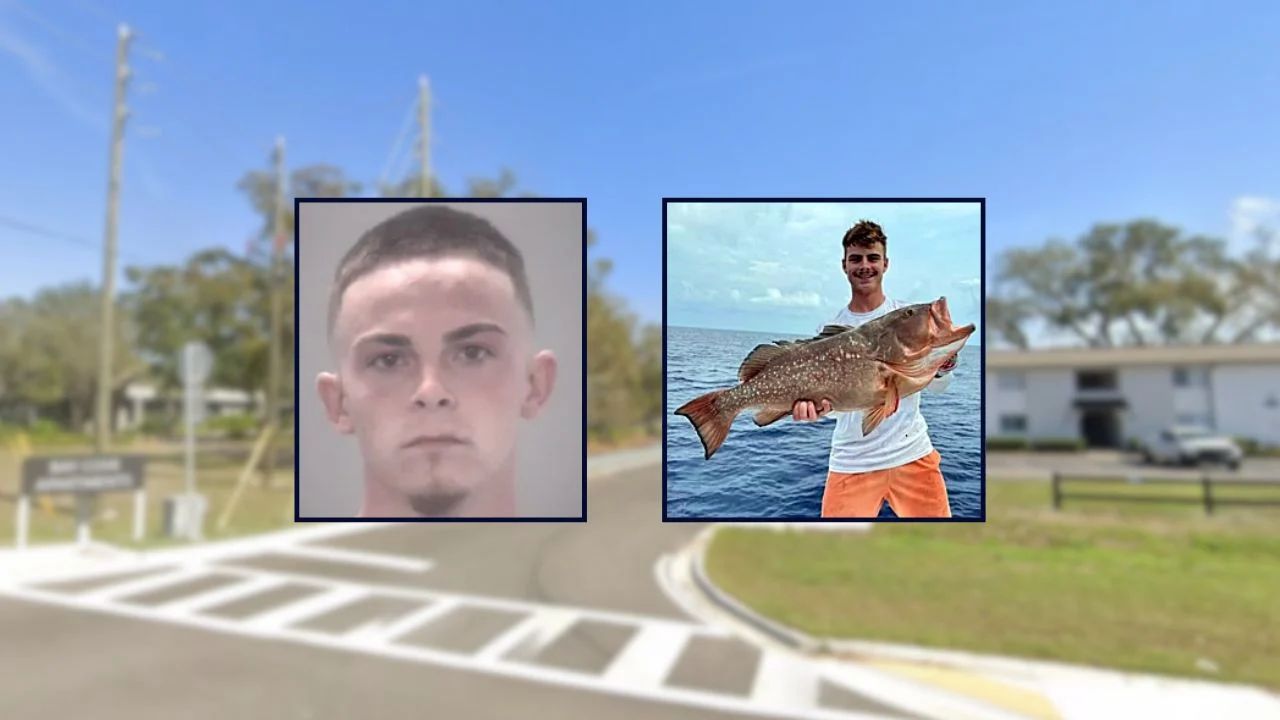
A Florida man has been sentenced to 30 years in prison for killing his ex-girlfriend’s new partner during a confrontation at a Clearwater apartment in July 2022. The sentence follows a jury’s decision to convict him of second-degree murder earlier this year.
Stuart Beck, 25, received the prison term on October 9 from Sixth Judicial Circuit Judge Philippe Matthey in Pinellas County. The case centered on the death of 20-year-old Michael Conrad, who was shot inside an apartment at the former Bay Cove Apartments on U.S. Highway 19 North.
The shooting happened during the early morning hours of July 6, 2022. Investigators said Beck forced his way into the apartment before the confrontation that ended with Conrad being fatally shot.
Dispute Over What Happened Before the Shooting
The trial featured conflicting accounts of the events leading up to Conrad’s death, with prosecutors challenging Beck’s claim that he acted in self-defense.
The woman involved in the dispute testified that she and Beck had ended their relationship several months before the shooting. However, his name remained on the apartment lease, and she said they occasionally continued spending time together.
She had also started seeing Conrad.
Prosecutors argued that Beck knew Conrad was at the apartment before arriving. According to testimony presented at trial, Beck called the woman and indicated that he had seen Conrad’s truck parked outside.
Beck disputed knowing Conrad was there when he arrived. Prosecutors maintained that forcing his way into the apartment and confronting Conrad undermined his self-defense argument.
Defendant Changed His Account of the Shooting
During the investigation, Beck maintained that the shooting was accidental. His explanation changed when he testified at trial, where he acknowledged deliberately making the gun fire but denied intending to kill Conrad.
Beck claimed he was afraid for his life during a struggle over the weapon in a bedroom. He testified that he had previously been beaten by Conrad and two of his friends and feared Conrad would take control of the gun.
Prosecutors rejected that explanation, arguing that Beck initiated the confrontation by kicking in the apartment door and bringing a firearm into the encounter.
The defense argued that the incident was an emotionally charged confrontation involving a complicated romantic relationship and that the circumstances did not support a first-degree murder conviction.
After considering the evidence, jurors found Beck guilty of second-degree murder in July 2026. They did not convict him of first-degree murder, which would have required a finding of premeditation under the charge presented at trial.
Judge Weighed the Circumstances Before Sentencing
During the October 9 sentencing hearing, prosecutors and Conrad’s relatives sought a life sentence. The judge ultimately imposed 30 years in prison.
The hearing also brought attention to a traumatic event in Beck’s own past. His father was shot and killed when Beck was 15, and Beck had previously testified during the trial of his father’s killer.
Judge Matthey acknowledged that experience when explaining his decision, describing it as an unusual circumstance worth considering. However, he made clear that Beck’s childhood trauma did not excuse the actions that led to Conrad’s death.
The judge also considered the jury’s decision to convict Beck of second-degree murder rather than first-degree murder when determining the appropriate sentence.
Conrad’s Family Describes a Lasting Loss
For Conrad’s relatives, the sentencing hearing was an opportunity to explain how his death had changed their lives.
One of his aunts delivered an emotional statement about the absence Conrad left behind, describing how his death had taken away the laughter and everyday moments that once filled their home.
She told Beck that the loss had condemned the family to a lifetime of grief and expressed hope that he would carry the weight of what he had done.
The family had sought a life sentence, emphasizing that no prison term could restore the young man they had lost.
The 30-year sentence brings the criminal case to a significant stage after more than four years between the shooting and sentencing. For Conrad’s family, however, the court’s decision cannot undo the loss of a 20-year-old whose future was cut short.
