

When Sara Gmitro received a breast cancer diagnosis shortly before Christmas last year, she knew her treatment would change more than just her medical routine. The Naperville woman would also have to adjust to life after surgery.
Gmitro had been diagnosed with stage 1 breast cancer in her left breast. After discussing her options with her medical team, she chose to undergo a double mastectomy. She had the surgery on Jan. 30 and returned home that same day.
The experience soon led her to a simple idea that has grown into a way of helping other women.
While recovering, Gmitro discovered Knitted Knockers, soft handmade breast prostheses made by volunteers who knit or crochet them for women who have undergone mastectomy or lumpectomy.
The prostheses are designed to be placed inside a regular bra. Unlike some traditional breast forms, they are lightweight, adjustable and available free to women who need them.
For Gmitro, the discovery came at a time when having a comfortable option mattered.
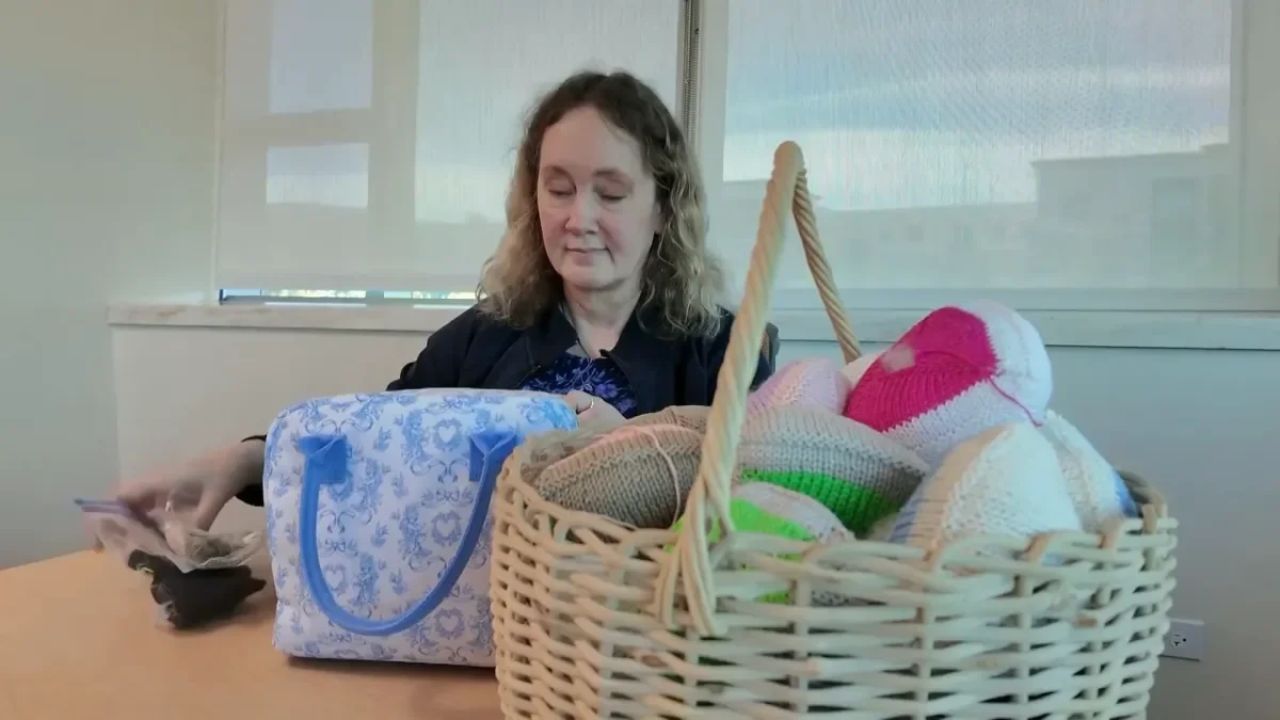
She taught herself how to make a pair while waiting for her silicone prosthetics. What started as something practical for her own recovery soon became a way to support other women.
“I was excited to just have something to put in my bra at the beginning,” Gmitro said.
She eventually connected with another local woman who distributes Knitted Knockers in the Aurora area. Gmitro began making the prostheses and passing them along to women who needed them.
Her effort has also reached medical offices. She offered her surgeon different sizes and colors that could be made available to patients, and some medical clinics keep Knitted Knockers on hand so women can have an option without waiting for a traditional prosthesis to be ordered.
Dr. Anna Chichura, a breast surgical oncologist with Duly Health and Care’s Brian Moran Cancer Institute, said the handmade prostheses can provide both practical and emotional benefits for patients.
Traditional breast prosthetics can be expensive, even when insurance is involved. Chichura said patients may face costs approaching $1,000, making a free alternative especially valuable for women recovering from surgery.
The Knitted Knockers organization says its prostheses are made specifically for women who have had mastectomies or lumpectomies. Its current program connects patients with volunteer knitters and crocheters and provides the handmade products at no cost.
The organization also says the prostheses can be adjusted to accommodate different needs and can be used with a regular bra. Women can request a free pair through its network by providing information such as bra size and color preference.
For Gmitro, however, the project is about more than creating a practical alternative to a traditional prosthesis. It has given her a way to turn a difficult chapter of her own life into support for women who may be beginning theirs.
Her story also highlights how small acts of community support can become meaningful during cancer recovery. A pair of knitted prostheses may be simple, but for someone adjusting to life after surgery, having a comfortable option immediately available can make an important difference.
Gmitro’s experience is now part of a broader volunteer effort that brings together breast cancer survivors, knitters, crocheters and medical providers. What began with her own search for comfort has become a way for her to offer that same sense of support to others.
