

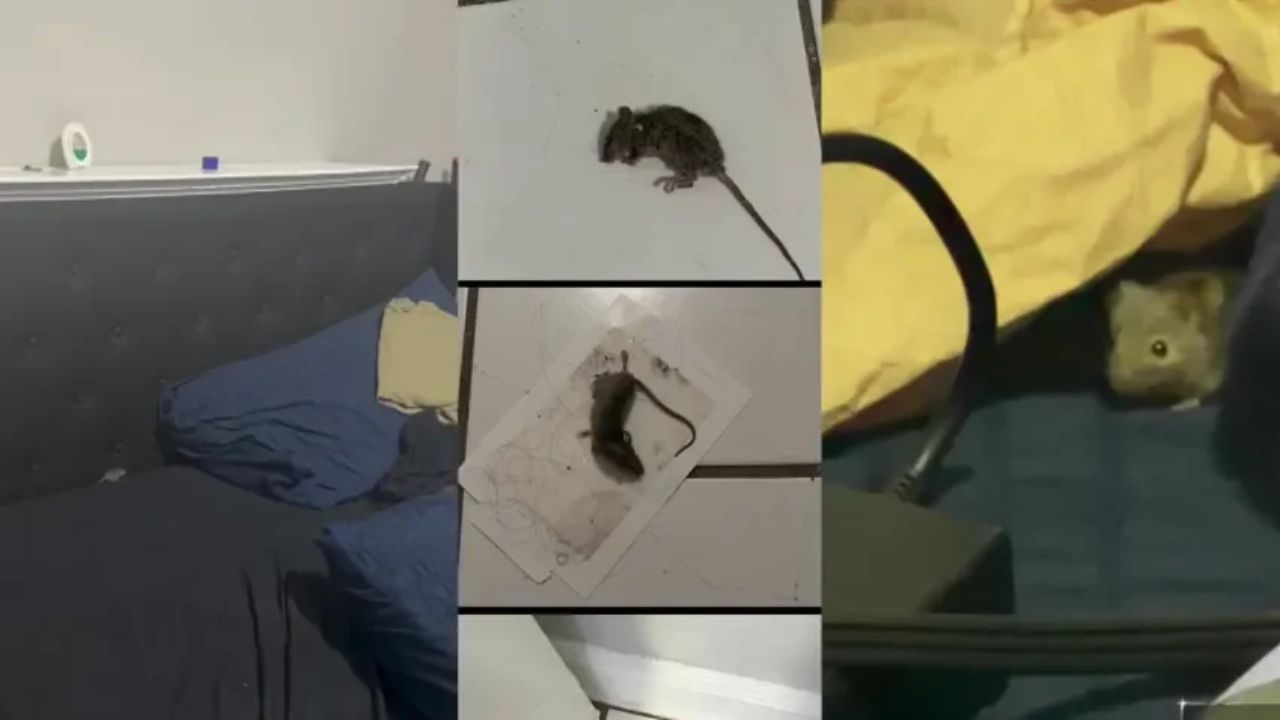
A Hartford mother says a persistent mouse infestation turned her family’s apartment into a place they could no longer comfortably call home. After weeks of trying to get the problem addressed, Allison Bridges and her four children were moved into temporary housing while city officials worked to address the conditions.
Bridges said the mice began appearing inside her Bellevue Street apartment in July. What started as a pest problem eventually became a daily struggle, with rodents showing up in places where her children should have been able to sleep, play and feel safe.
Photos and videos she recorded show mice she says she trapped or discovered in her bed.
“It’s been a nightmare here. My kids aren’t comfortable. I’m not comfortable,” Bridges said.
For a mother raising four children, the situation has brought more than frustration. She says the infestation has disrupted her family’s daily life and left her worried about the cleanliness and safety of their living space.
“You can’t walk anywhere without tripping or squishing one. It’s really bad,” she said.
Mother says infestation affected the entire family
Bridges said the problem became increasingly difficult to manage as mice continued appearing throughout the apartment. She also reported bite marks and skin breakouts affecting members of her household, which she believes may be connected to the conditions.
“We do have bite marks, and our body has been breaking out from it. It’s a nasty environment,” she said.
The cause of those symptoms has not been independently established. However, a significant rodent infestation can create sanitation concerns because mice may contaminate food, kitchen surfaces and other household areas with their droppings and urine. Rodents can also damage belongings and introduce nesting materials into places where families store food or sleep.
For households with children, these concerns can make an infestation especially distressing. Keeping food protected, cleaning contaminated areas safely and preventing rodents from entering sleeping spaces can become difficult when the problem is widespread.
Bridges said she had reached a point where her children could no longer feel comfortable in their own home.
Weeks of attempted contact before city inspection
According to Bridges, she repeatedly tried to contact her landlord about the infestation but struggled to get a response.
She described a lengthy period without communication, saying she had no contact with the property owner from August 2 until September 19.
After those efforts failed to resolve the situation, she turned to the city of Hartford for assistance.
City inspectors visited the apartment on Tuesday and found evidence of mice, according to the account of the inspection. Officials then posted a notice on the front door.
The inspection brought the issue to the attention of city authorities, creating a formal path for follow-up rather than leaving Bridges to handle the problem on her own.
Hartford’s housing enforcement system allows residents to report rodent infestations and other conditions that may affect the health and safety of a rental property. The city can inspect reported conditions and pursue enforcement when housing requirements are not met.
For Bridges, the next concern is whether the infestation will be eliminated completely and whether the apartment will be safe for her family to return to.
Hartford mayor says the conditions are unacceptable
Hartford Mayor Arunan Arulampalam expressed concern about the conditions Bridges described and said the city was taking steps to address the situation.
“No one should be living in those conditions, especially in the capital city of the wealthiest state and wealthiest country in the history of the world,” Arulampalam said.
The mayor said the landlord had been instructed to hire a licensed exterminator. If the problem is not addressed, the city could take additional enforcement steps, including issuing a notice of violation.
He also pointed to the city’s ability to use fines and property liens to hold landlords accountable for substandard housing conditions.
“We will post notices. We will put liens on properties in which landlords hold their properties in substandard conditions and work to enforce those liens,” he said.
Such measures are intended to encourage property owners to correct problems that threaten residents’ health, safety or ability to use their homes.
The effectiveness of those steps, however, depends on what happens after an inspection. Pest treatment may need to be followed by additional inspections, sealing entry points and addressing conditions that allow rodents to return.
Property owner says exterminator is planned
The property owner, Gilberto Barahona, said he planned to bring in a licensed exterminator the following week to address the infestation.
Barahona confirmed that city officials had contacted him and said he was working with them to resolve the problem.
He also said the building’s two other tenants had not reported similar complaints.
That response signals a planned step toward treatment, but the infestation’s full extent and whether additional work will be necessary remain important questions.
Effective rodent control generally involves more than setting traps. Pest-control professionals may need to identify where mice are entering, inspect areas where they nest, determine whether food or waste is attracting them and recommend ways to prevent another infestation.
Sealing gaps around pipes, doors and other openings can help reduce access. Properly storing food and removing garbage can also limit potential food sources. In a heavily infested property, coordinated treatment and follow-up checks may be needed to determine whether the problem has been resolved.
For residents who have already experienced a serious infestation, the distinction between treating visible mice and preventing their return can be particularly important.
Family moved into temporary housing
While the situation at the apartment is being addressed, Bridges and her four children have been relocated by the city.
The family was initially placed in a motel before moving into a larger hotel room for a month.
The temporary arrangement provides the family with somewhere else to stay, but it also leaves questions about what happens next, including when the apartment will be considered safe and whether the family can return without facing the same problem.
Moving out can create additional challenges for a household with four children. Families may have to manage school routines, transportation, meals, clothing and other daily needs while living away from home.
Bridges wants officials to continue monitoring the property until the infestation is fully resolved.
“They need to be held accountable and follow through until the end. Make sure the problem is actually fixed,” she said.
Her request centers on follow-through: not simply arranging extermination, but ensuring that the underlying problem is addressed and the apartment is suitable for her family to occupy again.
What Hartford tenants can do about rodent problems
The situation also highlights the options available to Hartford residents who are dealing with pest infestations or other unsafe housing conditions.
The city’s official housing inspection service accepts reports involving rodents and pests, mold, sanitation problems, malfunctioning ventilation and other apartment-related concerns. Residents can contact Hartford 311 at 860-757-9311 or submit a request through the city’s housing inspection webpage.
Connecticut law also generally requires landlords to comply with applicable housing codes and maintain rental properties in a fit and habitable condition. The specific obligations and available remedies can depend on the circumstances of the property and the problem involved.
Tenants experiencing an infestation can help document the situation by keeping dated photographs, saving messages sent to the landlord and recording inspection dates or case numbers. Written records can help establish when the problem began, what steps were requested and whether conditions improved after treatment.
Residents should avoid handling rodent droppings with bare hands or sweeping and vacuuming them while dry, since contaminated dust can become airborne. Public health guidance recommends wetting droppings and urine with an appropriate disinfectant before cleaning and following product instructions.
These steps do not replace professional pest control or a housing inspection, but they can help tenants communicate the severity of a problem and reduce some exposure risks while waiting for assistance.
A family waiting for a lasting solution
Bridges’ immediate priority is getting her children back into a safe and comfortable living environment. Although the landlord has said extermination is planned and the city has begun responding, the family still needs reassurance that the infestation will not return.
The case raises broader questions about how quickly serious housing complaints are addressed and how officials can ensure that corrective work is completed when tenants report conditions that make an apartment difficult to live in.
For Bridges, the goal is straightforward: she wants her family to have a home where her children can sleep, move around and feel secure without mice becoming a constant concern.
As the city and property owner work toward a solution, she is asking officials to remain involved until the problem is genuinely resolved.
For families facing similar conditions, her experience also underscores the importance of reporting infestations early, documenting attempts to obtain help and contacting local housing inspectors when a landlord does not respond.
