

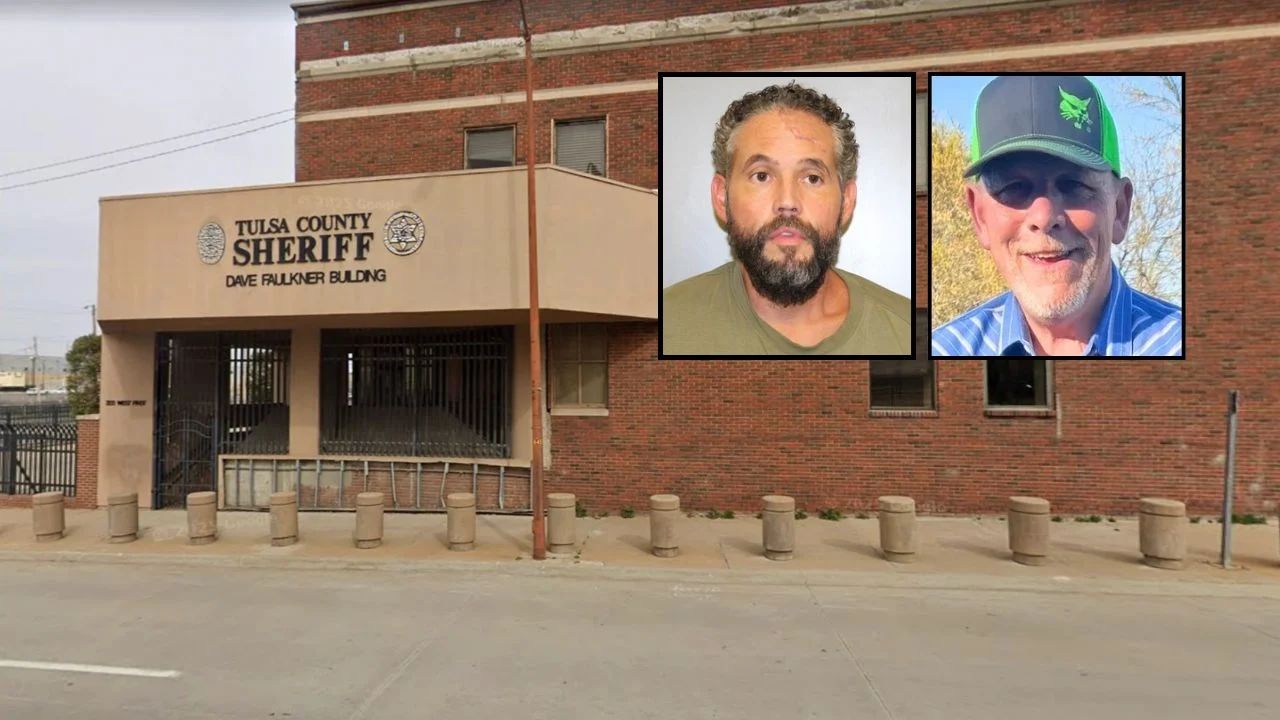
A night out with friends allegedly ended in a deadly crash on an Oklahoma highway, leaving a family grieving the loss of a beloved father and grandfather.
Angelo Lacirignola, 43, is facing a second-degree murder charge after authorities say he drove a Corvette the wrong way on an Interstate 244 off-ramp in Tulsa County and collided head-on with a pickup truck driven by 65-year-old Fredie Hunter.
The crash happened on September 5, 2026. Hunter survived the initial collision but suffered devastating injuries, including a broken back and a traumatic brain injury. After spending 25 days in intensive care, he died on September 30, according to reports about the case.
Investigators allege Lacirignola was heavily intoxicated when the collision occurred. His reported blood alcohol concentration was 0.22, nearly three times Oklahoma’s standard legal limit of 0.08.
Now, as the criminal case moves forward, Hunter’s family is left trying to cope with a loss they say has deeply affected multiple generations.
What Investigators Say Happened Before the Crash
According to investigators, Lacirignola had spent time at a Tulsa casino before the collision. The owner of the Corvette reportedly told authorities that Lacirignola had been there for a night out with friends.
Investigators also spoke with a person who had been with him earlier that evening. That person reportedly described going to a bar, playing pool and drinking heavily.
Authorities allege Lacirignola later entered the highway ramp traveling in the wrong direction, putting other motorists directly in danger.
Hunter was driving along the ramp when the Corvette allegedly came toward him. The two vehicles collided head-on, leaving both drivers injured.
Emergency responders arrived and transported the men to hospitals for treatment. Hunter’s injuries were especially severe, and his recovery remained uncertain during his extended hospital stay.
The reported alcohol level became a key detail in the investigation. Oklahoma law generally sets the legal blood alcohol concentration limit for adult drivers at 0.08. A reported level of 0.22 is substantially higher and falls within the state’s aggravated-DUI threshold of 0.15 or above. The eventual criminal findings will depend on the evidence presented in court.
Hunter Fought for His Life in the Hospital
For Hunter’s loved ones, the crash was only the beginning of a painful and uncertain period.
He suffered a traumatic brain injury, brain damage and a broken back, along with other serious injuries. His family faced weeks of waiting while he remained in intensive care.
Despite the medical attention he received, Hunter died on September 30, nearly a month after the collision.
His death turned an already devastating crash into a criminal case involving a fatality. It also left his family confronting the loss of someone they described as much more than a victim of a highway collision.
Hunter was a father, grandfather and friend whose presence mattered deeply to the people around him.
His daughter, Kodye Geeding, spoke about the family’s heartbreak and the close relationship he shared with her 10-year-old child.
“I just pray he didn’t see it coming,” Geeding said.
She described her father as a great dad and an even better grandfather, adding that her child had been especially close to him.
For the family, the loss is not limited to the absence of a loved one. It also means the loss of everyday moments, family gatherings and the relationship Hunter had built with his grandchild.
Why Wrong-Way Crashes Can Be So Dangerous
Wrong-way collisions are particularly dangerous because drivers traveling in opposite directions can meet with little time to react. On highway ramps and divided roads, motorists generally expect traffic to follow a specific direction.
When a vehicle enters from the wrong side, an approaching driver may have very little opportunity to avoid a collision, especially at highway speeds.
Alcohol can make that danger worse by affecting judgment, coordination, attention and reaction time. A driver who is impaired may struggle to recognize road signs, judge distances or respond appropriately to unexpected traffic conditions.
Oklahoma’s Highway Safety Office identifies impaired driving as a major road-safety concern in the state. Its guidance emphasizes that alcohol can affect driving ability and that impairment is not limited to drivers whose blood alcohol concentration reaches the standard 0.08 threshold.
In a case involving an alleged wrong-way maneuver and a reported BAC of 0.22, investigators must examine the circumstances surrounding the crash and the available evidence as the criminal proceedings continue.
The allegations against Lacirignola have not yet been established as a conviction.
A Serious Criminal Charge
Lacirignola has been charged with second-degree murder in connection with Hunter’s death. The charge is an allegation, and he is presumed innocent unless proven guilty in court.
The case places attention on the circumstances that investigators say led to the collision, including the alleged wrong-way driving and the reported level of alcohol in Lacirignola’s system.
A fatal crash can result in serious criminal charges when authorities believe a driver’s actions went beyond an ordinary traffic mistake. The precise legal findings and any eventual penalties will depend on the charges, evidence and outcome of the proceedings.
Court records indicate the case is being handled in Tulsa County. A preliminary hearing had been reported as scheduled for November 18, 2026, although hearing dates can change as a case progresses.
A Family Left With Lasting Grief
As the legal process moves forward, Hunter’s family must continue living with the consequences of the crash.
Geeding’s words about her father and her child’s bond with him reflect the personal cost of a collision that began with what investigators describe as dangerous driving.
For a grandchild who was especially close to Hunter, the loss means growing up without the person who had played such an important role in their life. For his daughter and other relatives, it means finding a way to move forward while remembering the man they knew before the crash.
The case also serves as a reminder of the risks impaired driving can create for people who have done nothing wrong and are simply traveling home or going about their day.
Investigators allege that a night of drinking preceded the wrong-way collision that ultimately claimed Hunter’s life. As the case proceeds, his family is left remembering a father and grandfather whose life extended far beyond the circumstances of his death.
