

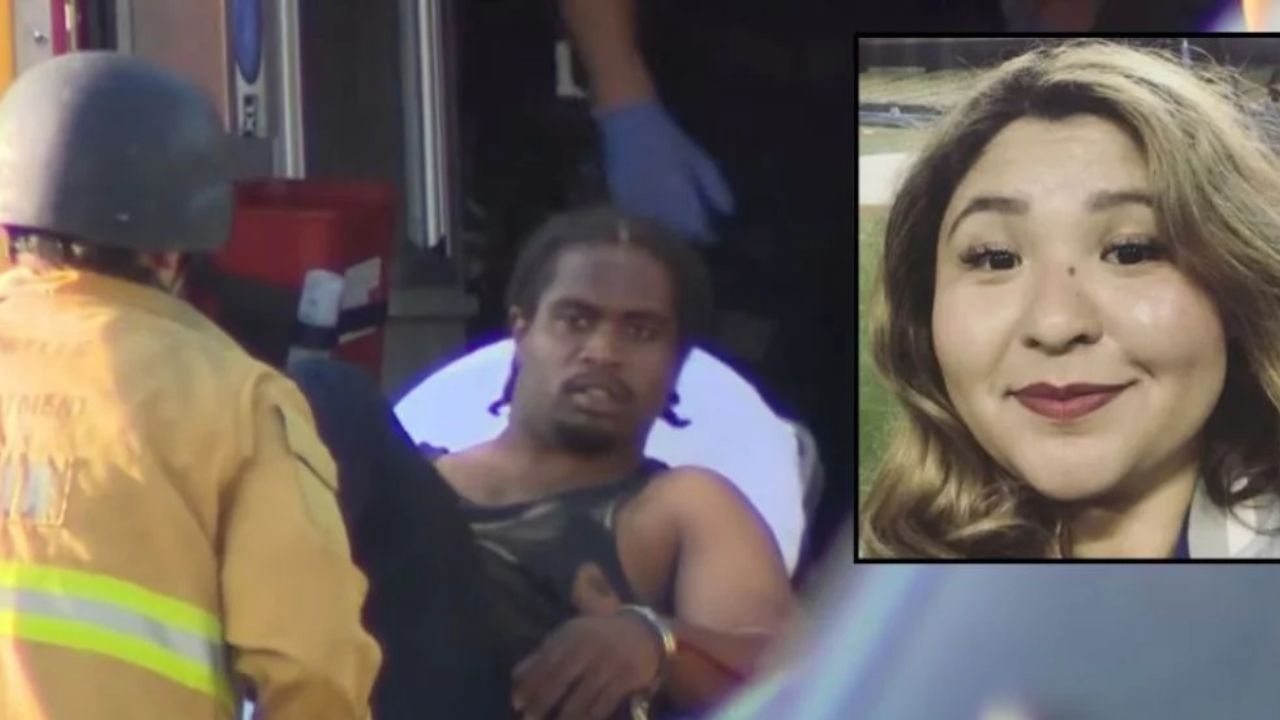
A California man whose violent crime spree ended in a deadly standoff at a Trader Joe’s grocery store in Los Angeles has been sentenced to more than 200 years to life in prison.
Gene Evin Atkins, 36, received the sentence on October 14, 2026, for his role in the July 2018 incident that led to the death of Melyda “Mely” Corado, a 27-year-old assistant store manager. His convictions include second-degree murder and dozens of other felony offenses involving attempted killings, assaults and people held hostage inside the store.
Although a police officer fired the bullet that killed Corado, prosecutors argued that Atkins’ actions set the deadly confrontation in motion. A jury ultimately found him guilty of second-degree murder after a retrial.
The case, which began with shootings at a home in South Los Angeles and ended with frightened shoppers trapped inside a grocery store, has remained a painful reminder of how quickly a police pursuit can turn into a life-threatening emergency for people caught in the middle.
A Violent Morning Led to a Police Chase
The events unfolded on July 21, 2018, when Atkins became involved in a violent confrontation at his grandmother’s home in South Los Angeles.
During the incident, he shot his 76-year-old grandmother and his 17-year-old girlfriend. He then took his grandmother’s vehicle and fled, prompting police to pursue him through the city.
Authorities later said Atkins attempted to carjack someone at a gas station but was unsuccessful. During the pursuit, he also fired at officers, according to police accounts.
The chase ended near a Trader Joe’s store in the Silver Lake neighborhood after Atkins crashed into a pole.
Rather than surrendering, Atkins got out of the vehicle and fired at pursuing officers as he ran into the grocery store. Officers returned fire, and Atkins suffered a gunshot wound to his arm.
Inside, shoppers and employees suddenly found themselves in a frightening situation as the armed confrontation continued. The standoff lasted more than three hours, with more than two dozen people held hostage, according to prosecutors.
What began as a police pursuit had become a crisis involving employees, customers and officers trying to bring the situation to an end.
How Melyda Corado Was Killed
Corado was working as an assistant manager at the Silver Lake store when the confrontation erupted.
During the exchange of gunfire between Atkins and police, a bullet fired by an officer struck Corado. She had been near the store’s entrance when the shooting occurred and then moved back inside, where she collapsed behind the manager’s desk.
Her coworkers tried to help. Fellow employees carried her outside so paramedics could provide emergency treatment, but she could not be saved.
Corado was 27 years old.
Her death became the central issue in the later murder proceedings against Atkins. Prosecutors maintained that his decision to fire at police and create the dangerous standoff made him criminally responsible for the fatal outcome, even though the bullet that killed Corado came from an officer’s weapon.
The distinction became important during the legal proceedings because the case required jurors to consider not only who fired the fatal shot but also whether Atkins’ conduct legally made him responsible for her death.
The First Trial Ended Without a Murder Verdict
In June 2026, a jury convicted Atkins on 40 felony counts connected to the 2018 crime spree.
Those convictions included three counts of attempted murder, six counts of assault with a semiautomatic firearm, 24 counts of false imprisonment involving hostages, two counts each of attempted carjacking and mayhem, and additional offenses related to the pursuit and violence.
However, the jury did not reach a verdict on the second-degree murder charge involving Corado’s death.
That meant the murder allegation remained unresolved even as Atkins faced a substantial prison sentence for the other offenses.
Prosecutors subsequently pursued a retrial on the murder charge. On August 18, 2026, a second jury found Atkins guilty of second-degree murder.
The verdict established his criminal responsibility for Corado’s death under the prosecution’s legal theory, despite the fact that she was struck by a police-fired bullet.
The murder conviction added another major count to an already lengthy list of felony convictions and cleared the way for the sentence imposed in October.
What the Sentence Means for Atkins
Atkins was sentenced to more than 200 years to life in prison, effectively ensuring that he will spend the rest of his life behind bars.
The sentence reflects the number and seriousness of the offenses arising from the July 2018 incident, including the shootings that preceded the police chase and the hostage situation inside the store.
The case involved several distinct acts of violence, as well as the danger faced by shoppers and employees who had no connection to the original confrontation.
For the victims and their families, the court proceedings stretched across years. The initial criminal case addressed the attempted killings and other offenses, while the separate murder retrial focused on Corado’s death.
The final sentence brings the criminal proceedings to a significant milestone, though it cannot undo the consequences for those affected by the incident.
Corado’s Family Had Already Reached a Settlement With Los Angeles
The criminal case was not the only legal battle connected to Corado’s death.
Her family filed a wrongful-death lawsuit against the city of Los Angeles and the officers involved in the shooting. In August 2024, the city agreed to a $9.5 million settlement with the family.
That civil settlement addressed the fatal police shooting, while Atkins’ criminal case focused on his actions leading to the confrontation.
The two proceedings dealt with different questions. The civil case concerned the circumstances surrounding the officer-involved shooting and the family’s claims against the city. The criminal case examined Atkins’ conduct and whether it made him legally responsible for Corado’s death.
The settlement did not erase the family’s loss, and the later murder conviction did not change the fact that Corado was killed by a police-fired bullet.
Together, the proceedings illustrate the complicated legal consequences that can follow a violent confrontation involving both a suspect and responding officers.
A Case That Left Lasting Questions
The Trader Joe’s standoff was more than a police chase that ended in a grocery store. It involved two people shot at the beginning of the incident, a dangerous pursuit, an armed confrontation with police and dozens of people trapped inside a public business.
For Corado’s family and coworkers, the outcome was especially devastating. She had been at work when the violence unfolded, and her death transformed an ordinary shift into a tragedy that continued through years of legal proceedings.
The case also highlights the difficult questions that arise when a person’s actions trigger a chain of events in which someone else fires the fatal shot. Prosecutors argued that Atkins’ conduct caused the circumstances that led to Corado’s death, and the second jury ultimately agreed.
With the October 2026 sentence, Atkins now faces more than two centuries to life in prison for the crimes connected to the incident.
For Corado’s loved ones, however, the legal outcome cannot restore the life lost that afternoon. The sentence closes a major chapter in the case, but the impact of what happened at the Silver Lake Trader Joe’s will remain with the people who witnessed it and the family left to remember her.
