

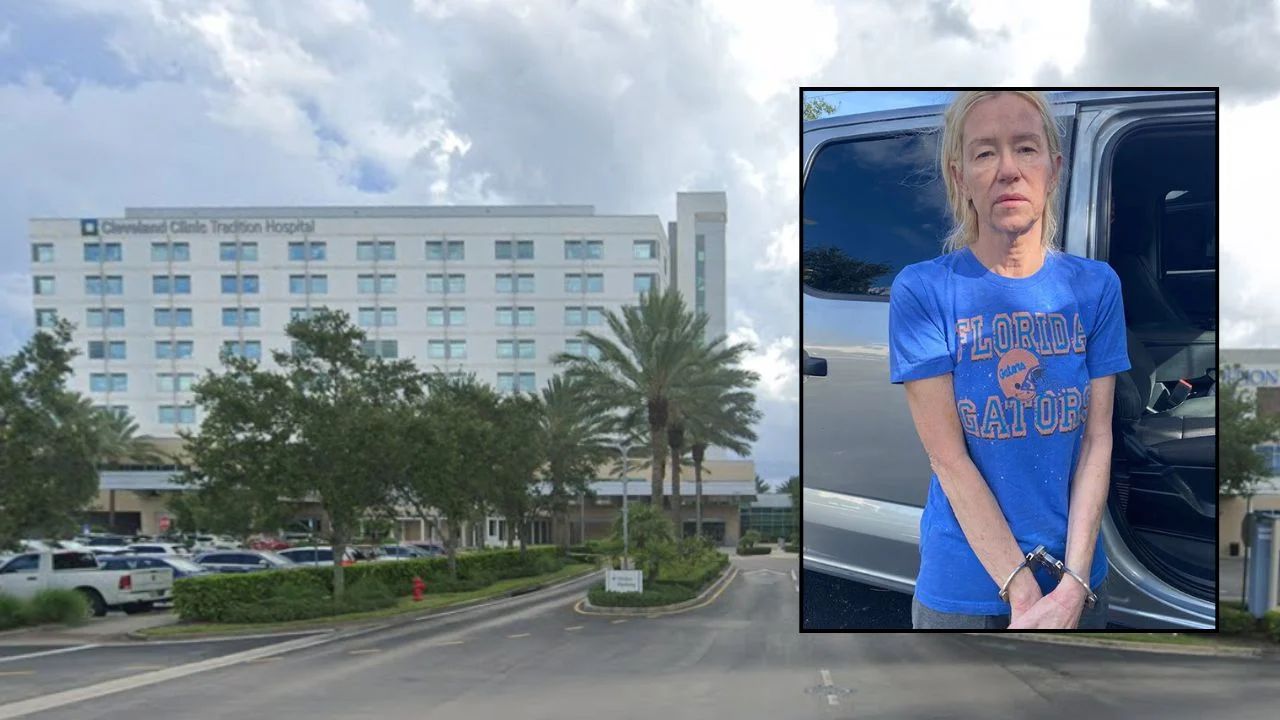
A Florida intensive care nurse is facing felony charges after investigators say she was caught taking fentanyl from a critically ill patient’s IV equipment at a hospital in Port St. Lucie.
Leslie Ann Pope, 54, was arrested on October 8 after an investigation into two separate incidents at Cleveland Clinic Tradition Hospital in June. According to police, a family member witnessed the nurse allegedly withdrawing medication from the patient’s fentanyl infusion with a syringe and putting it in her pocket.
Investigators say the circumstances became more concerning when Pope allegedly returned to the same patient’s room the following evening and approached the IV equipment again.
The case has raised questions about medication security, patient safety and the safeguards hospitals use to prevent controlled substances from being improperly removed.
Pope faces three felony charges: grand theft of a controlled substance, possession of a controlled substance without a prescription, and fraudulently obtaining a controlled substance.
She has denied unlawfully taking medication from patients or using drugs for personal consumption, according to police.
Family Member Reportedly Witnessed the First Incident
The investigation began with an encounter on June 24, when a family member visiting the critically ill patient allegedly saw Pope use a syringe to withdraw fluid from the patient’s fentanyl infusion.
According to investigators, Pope then placed the syringe in her pocket and left the room.
Police said Pope was not assigned to the patient’s care, raising questions about why she was allegedly handling the patient’s IV equipment in the first place.
The following evening, on June 25, Pope allegedly returned to the same room and approached the IV setup again.
Detectives reviewed surveillance footage that reportedly showed her manipulating protective caps on the equipment. The family member intervened during the second encounter.
Authorities have not established publicly whether any additional medication was removed during that visit.
The two incidents became the focus of an investigation involving hospital records, surveillance footage, witness interviews and medication transactions.
Surveillance Footage Became a Key Part of the Investigation
Investigators examined video recordings alongside medical and administrative records to determine what happened during the two encounters.
Brittany McNally, public information officer for the Port St. Lucie Police Department, said the surveillance footage played an important role in the case.
According to McNally, the recordings contradicted Pope’s recollection of the events.
Police also reviewed medication transactions and interviewed witnesses as part of their investigation. Authorities said they coordinated with the Drug Enforcement Administration, which handles federal investigations involving controlled substances and drug diversion.
McNally questioned why Pope would have been handling the patient’s fentanyl equipment when she was not assigned to provide care to that individual.
The investigation has not resulted in a public determination of whether the patient suffered additional medical harm as a result of the alleged incidents.
Why Fentanyl Access in an ICU Matters
Fentanyl is a powerful synthetic opioid used in medical settings to manage severe pain. In intensive care units, clinicians may administer it through a controlled infusion when a patient’s condition and treatment require it.
Because of its potency, the medication must be carefully prescribed, administered and monitored. Taking medication from a patient’s infusion without authorization can create serious concerns about whether the patient receives the intended dose.
Any unauthorized handling of IV medication can also raise questions about contamination, equipment integrity and whether the patient’s treatment was disrupted.
Hospitals typically use safeguards such as restricted medication storage, controlled-substance inventory records, medication administration documentation and procedures for investigating discrepancies. These measures are designed to help facilities identify missing medication and determine whether drugs have been handled appropriately.
When a suspected diversion involves a patient who is already critically ill, investigators may need to examine both medication records and the patient’s clinical documentation to establish what occurred.
In this case, police said they reviewed medication transactions and medical records as part of their effort to reconstruct the events.
Authorities have not publicly detailed whether the alleged removal changed the patient’s treatment or affected the patient’s recovery.
Police Say the Nurse Denied Wrongdoing
Following her arrest, Pope denied unlawfully taking drugs from patients or using drugs for personal consumption, according to McNally.
Police, however, said they believe the evidence supports the allegations against her.
The investigation included surveillance recordings, witness accounts and hospital documentation. Authorities have not announced a conviction, and the charges remain allegations that must be resolved through the legal process.
A Cleveland Clinic spokesperson confirmed that Pope no longer works at the hospital and said the facility is cooperating with law enforcement.
The hospital declined to provide further details because the investigation remains ongoing.
Arrest, Charges and Bond
Pope was arrested on October 8 and booked into the Palm Beach County Jail on an out-of-county warrant.
She was released on October 10 after posting a $150,000 bond.
The three charges involve allegations related to the unauthorized taking and possession of a controlled substance, as well as fraudulently obtaining such a drug.
As of the latest information provided by authorities, a court appearance date had not been publicly confirmed.
Investigation Highlights the Importance of Medication Oversight
The allegations have drawn attention to the safeguards hospitals rely on when administering powerful medications to vulnerable patients.
In an ICU, patients may depend on carefully managed infusions for pain relief and other aspects of their treatment. Staff members must follow established medication procedures, document administration accurately and report suspected discrepancies.
Surveillance footage, medication transaction histories and witness statements can help investigators determine whether those procedures were followed and whether a controlled substance was improperly removed.
For now, the case against Pope remains under investigation, with authorities relying on the evidence gathered from the hospital and the people involved.
The central questions are what happened during the two visits to the patient’s room, whether any medication was improperly taken, and whether the alleged actions affected the patient’s care. Those questions will ultimately need to be addressed through the legal process.
