

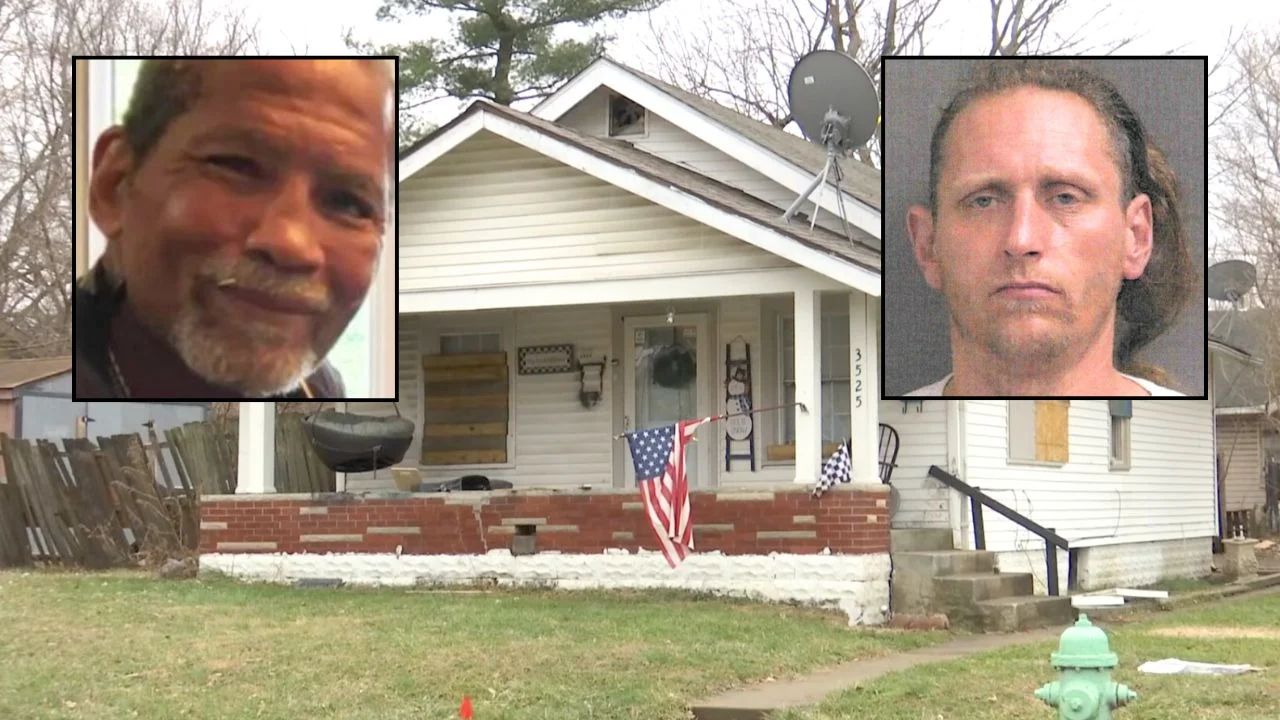
A 41-year-old Indiana man is facing decades behind bars for his role in the killing of Michael Greer, a 58-year-old man whose body was discovered inside a burning rental car in a rural field.
Randal Moon Jr. was sentenced to 86 years in prison on Tuesday after being convicted of murder and several related offenses in connection with Greer’s December 2025 death. The case involved allegations of a violent attack, a drive to a remote location and an attempt to destroy evidence by setting the vehicle on fire.
Court records show that Moon was convicted in September of murder, arson, kidnapping, obstruction of justice and conspiracy to commit obstruction of justice. He was the first of five people charged in the case to receive a sentence.
The investigation has raised disturbing questions about what happened to Greer before his body was discovered and the roles the other defendants allegedly played in the events leading to his death.
Burning Car Leads Investigators to a Grisly Discovery
The investigation began in the early hours of December 14, 2025, when someone reported a vehicle fire in a rural area of Delaware County, Indiana.
Deputies arrived at approximately 3:45 a.m. and found a rental car engulfed in flames. As they examined the scene, they discovered a person inside the vehicle.
The victim was later identified as Michael Greer, 58.
Investigators believe Greer was assaulted and shot at a residence in Indianapolis before being transported to the rural field in Delaware County, approximately 60 miles northeast of the state capital.
According to evidence presented in the case, Greer was wrapped in fabric before the vehicle was set on fire.
An autopsy revealed soot in his lungs, a finding that indicated he was still breathing when the fire started. That evidence added a particularly disturbing dimension to the investigation and helped establish the circumstances surrounding his death.
Authorities have not publicly established a clear motive for the killing.
What Investigators Say Happened Before the Fire
Moon’s role in the case became a central issue during the investigation and subsequent court proceedings.
According to reports about the case, Moon acknowledged being present at the rural field when the rental car was set ablaze. He also reportedly admitted to driving Amy Singhas and Ameariss Aponte back to Indianapolis afterward.
Investigators have alleged that Singhas drove Greer to the field. Reports also indicated that Singhas and Greer had previously been in a relationship, according to information shared by members of Greer’s family.
These details helped investigators piece together the movements of the people involved before and after the fire.
However, the case involves several defendants, and the allegations against each person must be considered separately. Moon’s conviction establishes his criminal responsibility for the offenses of which he was found guilty, while the cases against the other defendants remain subject to the court process.
Four Other Defendants Face Charges
Moon was not the only person charged in connection with Greer’s death.
Amy Singhas, Ameariss Aponte, Megan Sloan and Tallis McCoy were also charged with murder and arson, according to court records and reports on the investigation.
Their cases were still moving through the legal system following Moon’s sentencing.
The reported court schedule included a pretrial conference for Aponte on October 28, another for McCoy on November 4, and a scheduled jury trial for McCoy on December 14. Singhas and Sloan had trial dates listed for November 16.
Those dates reflect the schedule reported for the proceedings and may be subject to changes by the court.
Because the remaining defendants have not all been tried, the allegations against them should not be treated as established findings of guilt.
A Sentence That Could Keep Moon Behind Bars for Life
Moon’s 86-year prison sentence marks a major development in a case that began with a vehicle fire in an isolated part of Delaware County.
At 41, he faces a lengthy period of incarceration. The sentence reflects the seriousness of the offenses for which he was convicted, including murder and arson.
The case also illustrates how investigators can use evidence from a fire scene, forensic examinations and statements from people connected to an incident to reconstruct events that occurred before a victim was found.
In this investigation, the discovery of soot in Greer’s lungs provided important information about whether he was alive when the fire began. Investigators also examined how the vehicle reached the rural field and what happened after the blaze was set.
The prosecution of the other defendants will determine what additional criminal responsibility, if any, the courts establish in connection with Greer’s death.
Remembering Michael Greer
While the criminal proceedings have focused on the circumstances of Greer’s death, his obituary offered a different picture of the man remembered by his loved ones.
Greer was described as someone whose affection for family and friends shaped his life. His obituary highlighted his generosity, willingness to help others and ability to bring warmth and laughter to the people around him.
For those who knew him, the case represents more than a criminal investigation or a lengthy prison sentence. It is the loss of a family member and friend whose life ended in violent circumstances.
Moon’s sentencing brings one part of the legal process to a significant point, but the broader case remains ongoing as the other defendants face their own proceedings.
The motive behind Greer’s killing has not been publicly established, leaving an important question unanswered as the investigation’s legal aftermath continues.
