

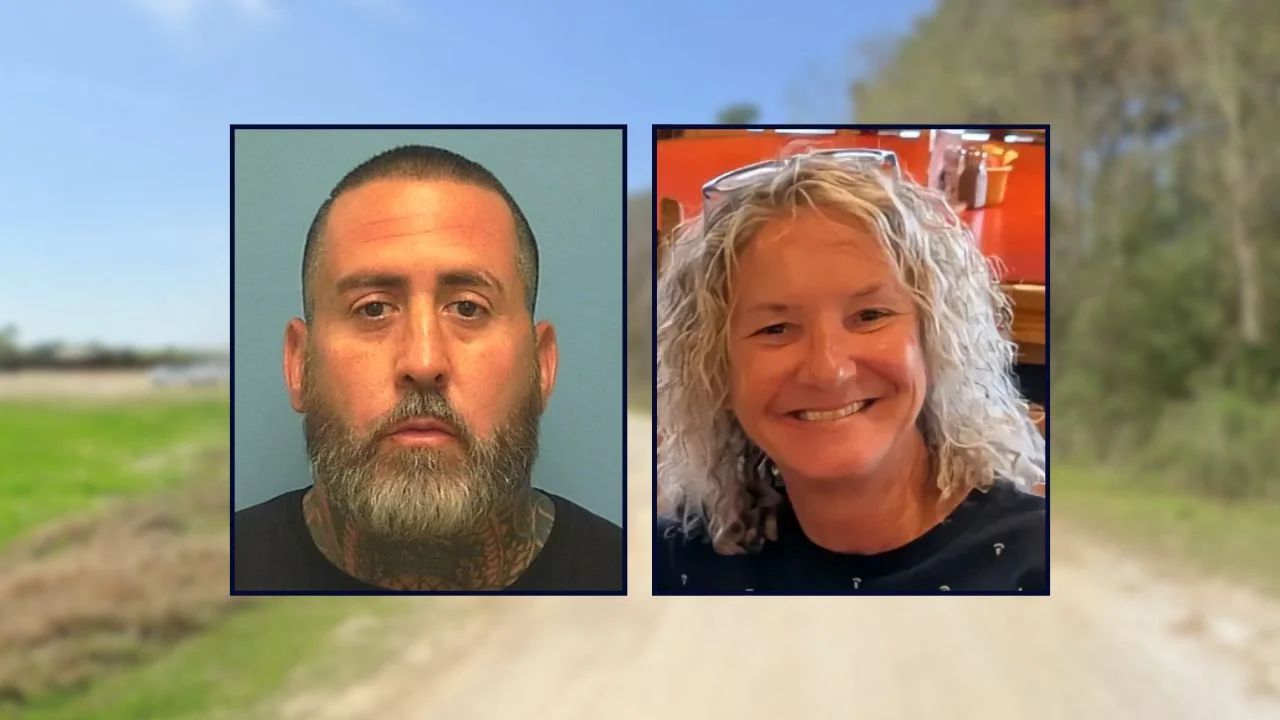
A Texas jury has sentenced Adrian Echevarria to life in prison after finding him guilty of killing 61-year-old Bami Elizabeth Carmane, a woman who had welcomed him into her life shortly after his release from prison.
Echevarria, 49, was convicted of murder on September 24, 2026, following a trial in Orange County. The jury reached its guilty verdict after a short deliberation and then returned a life sentence during the punishment phase.
The case dates back to August 21, 2025, when deputies were called to a residence on Foxglove Drive in Vidor after receiving a report of an unresponsive woman. Carmane was found dead inside the property, and investigators quickly determined that her death was not from natural causes.
Echevarria had been released from prison just one day before Carmane was found dead.
Investigators said the two had first connected through an online dating app while Echevarria was incarcerated. Prosecutors presented evidence that he used a contraband cellphone while in federal prison to communicate with Carmane, including through Facebook.
After his release on August 20, 2025, Carmane picked him up and allowed him to stay on property she owned. Investigators later determined that the two were together at a cabin on the property around the time of her death.
According to investigators, Carmane had gone further than simply offering Echevarria a place to stay. Authorities said she had also purchased a truck for him and provided him with a place where he could live as he started life outside prison.
The opportunity lasted less than a day.
After Carmane was killed, investigators said Echevarria attempted to clean blood and conceal evidence inside the cabin before going to the main house, where Carmane’s niece was staying. The niece went to the cabin, discovered Carmane unresponsive and called 911.
The investigation eventually brought together multiple law enforcement and forensic agencies, including the Orange County Sheriff’s Office, Texas Rangers, Jefferson County Sheriff’s Office, state crime laboratories and forensic medical specialists.
Echevarria was initially taken into custody on unrelated state and federal parole violations after investigators interviewed him. As the homicide investigation developed, an Orange County grand jury indicted him in November 2025 on charges of murder and aggravated sexual assault.
The murder charge ultimately went to trial.
For Carmane’s family, the case has remained about more than the circumstances of her death. They have described her as someone who enjoyed travel, nature and music and who cared deeply about animals and the people around her.
Her family has also said they do not want the circumstances of the killing to become the only thing people remember about her.
Carmane’s son previously described his mother as someone who was willing to see the good in other people. He said she had given Echevarria an opportunity to build a different life after prison, making the outcome especially difficult for the family.
During the trial, jurors heard how the relationship that began online eventually brought Echevarria to Carmane’s property shortly after his release.
After hearing the evidence, the jury returned a guilty verdict on the murder charge. The same day, jurors moved into the sentencing phase and took about 15 minutes before deciding that Echevarria should spend the rest of his life in prison.
The conviction closes a case that began with a 911 call at a Vidor residence more than a year earlier and ended with a life sentence for the man prosecutors said was responsible for Carmane’s death.
